Russia continues to destroy the Black Sea: oil spills from emergency tankers persist

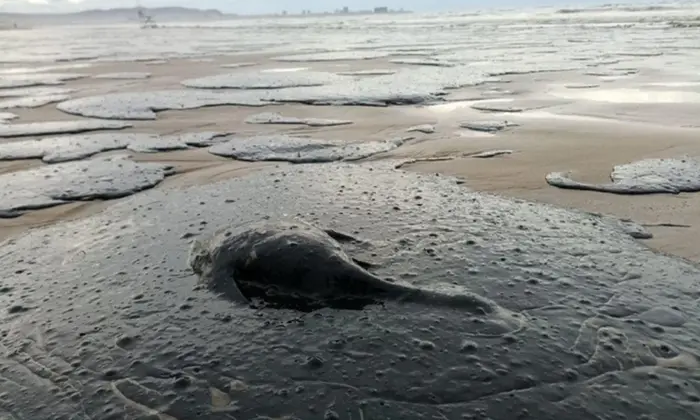
According to glavcom.ua: Russia continues to destroy the Black Sea, ignoring the consequences of a large-scale environmental disaster. Oil spills from tankers, which crashed at the end of last year in the Kerch Strait, are again being recorded on the beaches of Anapa. This is reported by 'Glavkom' referring to the Center for Counteracting Disinformation.
"The tanker disaster occurred almost ten months ago, but the wreckage of the vessels has still not been raised from the seabed, so oil leaks continue. The Russian authorities demonstrate complete indifference to the ecological threat: instead of genuinely addressing the aftermath of the disaster, they are focused on the war against Ukraine. This leads to ongoing pollution of the Black Sea, which will have long-term consequences for the region's ecosystem," emphasizes the CPD.
The Center also noted that as a result of the disaster, Russians are suffering as well - businesses on the Black Sea coast have incurred losses due to a disastrous tourist season, and vacationers who dared to come to the resorts risked their own health.
Constant pollution due to neglecting the consequences of the disaster
"Neglecting the consequences of the disaster demonstrates the complete degradation of state management in the Russian Federation - a system mired in war can no longer respond even to threats to its own environment and population," the message states.
Recall that on December 15 of last year, during stormy conditions in the Kerch Strait, due to the disaster of the Russian tankers 'Volgoneft-212' and 'Volgoneft-239', a significant amount of oil entered the sea, which continues to spread across the waters of the Black Sea.
The Ukrainian landing ship 'Artemida' is already ready to help eliminate the consequences of the disaster. Pollution of the Black Sea can have serious consequences for the local environment and the ecosystem as a whole, and immediate action is required to prevent further pollution of the area.

Read also