Storage Crisis Threatens Russian Oil Production, May Force Output Cuts

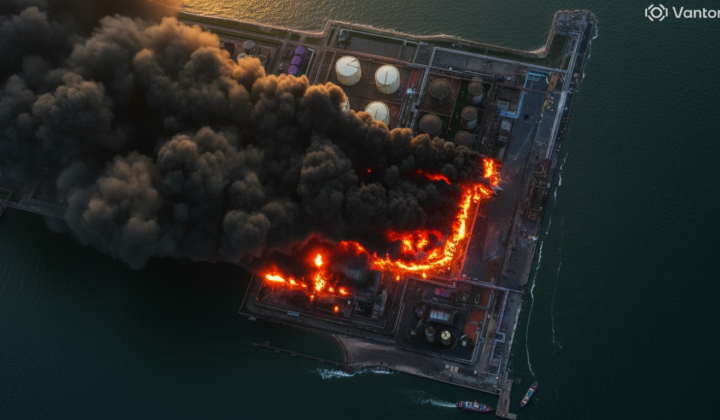
Russia's Hydrocarbon Storage Crisis
According to ХВИЛЯ: Russia is confronting a severe crisis in storing its extracted oil and gas. This situation stems from the narrowing of maritime export routes and systematic Ukrainian strikes on its energy infrastructure. Attacks by Ukrainian security and defense forces on fuel storage bases have critically damaged tank farms, leaving Russian companies in a difficult position. The nation's domestic storage capacity is limited and is now reported to be operating at maximum levels. As a result, Russia's oil and gas sector can no longer absorb the volumes currently being produced.
Expert Analysis
As long as the Kremlin views its export channels as restricted, it needs somewhere to stockpile and store its raw materials. The Russians are trying to keep it in their storage tanks, of which there aren't that many. They can be filled, but they are already essentially at maximum capacity.
Oleh Ustenko
A critical problem arises when Russian terminals cannot accommodate the entire volume of oil being extracted. "Today, Russian terminals simply do not exist in the quantity needed to store all that enormous volume of oil which Russia could potentially extract," notes Ustenko. When you cannot export the oil and all available domestic 'pots and containers' are completely full, there is physically nowhere left to store the raw material. This crisis highlights the growing vulnerability of Russia's energy sector, a cornerstone of its economy and war funding.
Due to these circumstances, Russia is being forced to consider a substantial reduction in its oil production volumes.
In effect, Russia is being forced to move to a third scenario, which is already being implemented: they will simply have to turn off the valve, cap the wells, and significantly reduce their own oil production.
Oleh Ustenko
This scenario points to the technological difficulties of halting a continuous extraction cycle, as well as the potential risks of losing capped wells due to harsh climate conditions and a lack of imported equipment.
Russia's oil storage problems underscore the impact of Ukrainian actions within the context of energy security. The destruction of fuel storage infrastructure is part of Ukraine's strategy to weaken Russia's economic foundation. Should Russia proceed with further cuts to oil production, it could face serious economic consequences, which would in turn affect its war capabilities and the overall state of its economy.
As the situation escalates, the implications for Russia's oil revenue become increasingly complex. While recent reports indicate that earnings from oil exports have reached a new high since 2022, the sustainability of this surge remains uncertain amidst the looming production cuts. The interplay between storage limitations and export capabilities could significantly alter the landscape of Russia's energy sector.

Read also