Russia's Satellite Surge Since 2022: A New Threat to Ukraine's Security

Russia's Escalating Satellite Activity
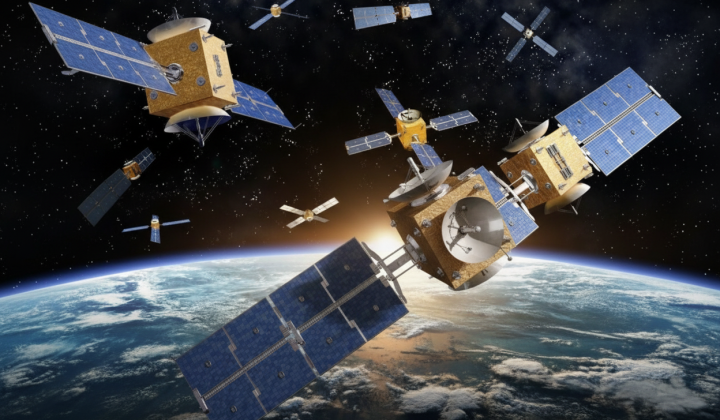
According to Главком: Since launching its full-scale invasion of Ukraine in 2022, Russia has dramatically accelerated its satellite deployment. According to a study by Texty.org.ua, Russia has placed 150 new satellites into orbit, bringing its total fleet of low-orbit spacecraft to 253. While the purpose of most remains undisclosed, those that are classified are predominantly for military communications and reconnaissance. This expansion represents a significant modernization of Russia's space-based military capabilities.
These Russian satellites make dozens of daily passes over Ukrainian territory, enabling persistent surveillance. Of the 253 low-orbit satellites, the function of 165 is unknown. Russia frequently conceals the true purpose of its spacecraft by labeling them as scientific or civilian missions. The primary surveillance threats come from satellites equipped for optical, radar, and radio-electronic intelligence gathering.
Satellite Classification and the Nature of the Threat
Among the 253 satellites, the known breakdown is as follows:
- 54 provide military communications,
- 12 are for radio-electronic intelligence,
- 7 are for optical reconnaissance,
- 4 are for technological experiments.
Russia also has the potential to access data from China's 1,094 low-orbit satellites. It is assessed that Russia operates at least one SAR (Synthetic Aperture Radar) satellite. Additionally, it can purchase satellite imagery from Western commercial providers. This multi-source approach gives Russia a formidable and layered intelligence picture.
Effective countermeasures against satellite observation do exist, including the use of decoys, camouflage, and moving equipment between satellite passes. However, as the study's authors note, there are virtually no blind spots for Ukraine, highlighting the severe challenge this poses for military operations. The continuous overhead monitoring complicates all aspects of battlefield planning and movement.
The post-invasion surge in satellite numbers signals a major enhancement of Russia's surveillance capabilities, creating new operational hurdles for Ukraine. In an environment where military actions can be constantly monitored, Ukraine must develop innovative strategies to protect its positions and hardware. Increasing transparency around satellite activities and fostering international cooperation could be vital in countering this dangerous trend.
As Russia enhances its satellite capabilities, the nation simultaneously ramps up its missile production, leading to unprecedented levels of aggression. This escalation is evident in the recent record-high missile strikes reported in January 2026, which utilized newly manufactured weaponry. Understanding the implications of these developments is crucial for grasping the evolving security landscape in the region. For more insights on this alarming trend, explore the details in our article about Russia's recent missile strikes.

Read also