Russia uses 4 modifications of Shahed-136: which drones attack Ukraine

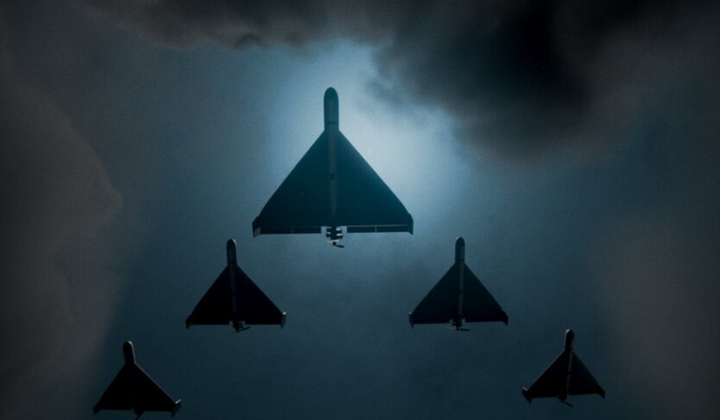
According to hvylya.net: The Russian army uses four main modifications of strike drones based on Iranian Shahed-136 unmanned aerial vehicles. This was reported by Vladislav Vlasuk, the advisor and commissioner of the President of Ukraine for sanctions policy.
One modification - Shahed-136 (Iran) - is a disposable strike drone with a range of 2000 km, a speed of 180 km/h, and a warhead weighing 50 kg. This UAV utilizes a CRPA antenna and LTE for telemetry transmission. Upgrades have also been made, such as color changes, warhead updates, and data transmission via LTE.
Geranium-2 (Russia, 'Alabuga') - a localized analogue of Shahed-136 with the same characteristics, but with Russian components and a 'Kometa' CRPA antenna. Upgrades include engine modifications and adaptation for winter conditions.
Harpia-A1 (Russia, Izhevsk) - an evolution of Shahed-136 with a shorter range (1500 km) and the ability to carry a warhead of up to 90 kg. It can be equipped with a thermal imager with AI guidance and has the capability to carry PTM-3 cassettes for mining.
Gerbera (Russia) - a multipurpose drone with a range of 450 km and a speed of 160 km/h. It can serve as a decoy, strike, relay, or reconnaissance aircraft. It has GNSS or a CRPA antenna, and in reconnaissance version - a mesh modem and video camera.
The Russian army uses various modifications of strike drones developed based on Iranian Shahed-136 UAVs. These models differ in flight range, warhead volume, and functionality, making them effective for performing a variety of tasks in military operations.

Read also