Sun's Activity Is Shifting: Researchers Uncover a Disturbing New Pattern

Study of Solar Activity
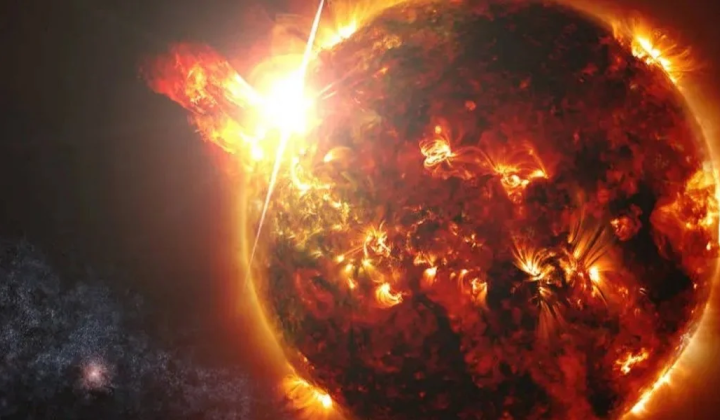
According to НВ — Техно: An investigation led by astrophysicist Bill Chaplin from the University of Birmingham has revealed systematic shifts in the solar activity cycle over the past four decades, notably a concentration of magnetic activity near the Sun's surface. Data from the Birmingham Solar Oscillations Network (BiSON), which has been monitoring the Sun nonstop since 1976, indicates that external activity is weakening while internal high-frequency oscillations remain robust. According to Chaplin, the evidence points to long-term changes in the Sun's cyclical behavior.
Solar Activity Cycles
The Sun's activity cycles run roughly every 11 years. Cycle 24, which spanned 2008 to 2019, was notably weaker than its predecessors in terms of sunspot count and radiation output. This study covers data from 1987 onward, encompassing cycles 22 through 25, highlighting the extensive observation period and its importance for understanding solar dynamics.
Bill Chaplin emphasized that with each new cycle, magnetic activity is becoming increasingly concentrated near the Sun's surface. This marks the first such discovery, made possible only through BiSON's decades-long observations. The relationship between the Sun's internal oscillations and surface activity has shifted in recent cycles, noted Sarbani Basu. She added that this trend cannot be attributed solely to a weakening magnetic field. The findings suggest a fundamental restructuring of the mechanisms by which the Sun's magnetic activity accumulates beneath its surface.
The onset of Cycle 26 is expected around 2030, opening new avenues for further research and monitoring of solar activity changes. Bill Chaplin and his team continue to investigate these phenomena, anticipating new breakthroughs in astrophysics. This was reported by Science Alert.
These results are crucial for understanding long-term shifts in solar activity that could affect Earth's climate conditions. Changes in the Sun's magnetic activity may have significant implications for space weather, electronics, and communication systems, making further research in this area highly relevant. The identified trends could help scientists better predict future solar cycles and their impact on Earth.

Read also