UBTech Unveils Emotionally Intelligent Robots Designed for Family Life


UBTech Launches U1 Humanoid Robots at Shenzhen Event
According to НВ — Техно: On July 1, UBTech introduced its new U1 series of humanoid robots in Shenzhen, featuring emotional artificial intelligence tailored for personal interaction and household integration. Over 13,000 orders were placed for these robots on the first day of the launch. Pricing for the U1 series starts at 119,800 yuan (approximately $17,650), with three variants available: Lite, Pro, and Ultra.
Technical Specs and Social Initiative
The U1 robots stand 183 centimeters tall for the male version and 168 centimeters for the female version. They boast 88 degrees of freedom, enabling them to replicate up to 90 percent of basic human movements. A key highlight is their emotional AI, which can recognize over 20 emotional states with accuracy exceeding 90 percent. These robots respond naturally to their environment without needing activation keywords.
UBTech also announced a charitable initiative: each year, it will donate 100 specially designed robots free of charge to elderly individuals living alone and other vulnerable groups. According to James Zhou,
“this is the second stage of evolution, where robots transition from hazardous work to service and communication.”
Michael Tam added,
“such companions can address global issues of loneliness and aging populations.”
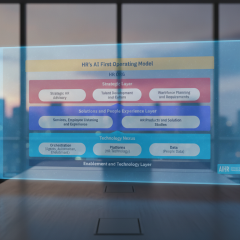
The U1 robots are crafted from silicone biomimetic skin, enhancing their appeal to users. A long-term memory system allows them to recall previous conversations, building lasting relationships with people. A three-tier architecture focused on local processing ensures data privacy without constant cloud connectivity. In this way, UBTech is advancing the integration of humanoid robots into daily life, offering new opportunities for interaction and support.
The deployment of U1 humanoid robots in everyday settings could mark a significant step in technology development aimed at improving quality of life, especially for vulnerable populations. With their emotional AI and conversational abilities, these robots may help fill emotional gaps experienced by the elderly and isolated individuals. This also opens new avenues for social innovation in technology and service delivery.
As the demand for humanoid robots continues to rise, it's interesting to note that Lutsk University has recently invested in a humanoid robot for a significant sum. This move highlights the growing recognition of robotics in educational and research settings. To learn more about this noteworthy acquisition and its implications for the future of robotics in academia, check out the details in the article on Lutsk University's recent investment.

Read also