Archaeon with One of the Smallest Genomes Found in Japanese Coastal Plankton

Discovering Life Within Marine Plankton
According to НВ — Техно: A global team of researchers has identified a new archaeon species, Sukunaarchaeum mirabile, residing in the marine plankton near Shimoda, Japan. This single-celled microorganism possesses one of the tiniest known genomes, consisting of just 238,000 DNA base pairs. Archaea like Sukunaarchaeum mirabile are distinct from bacteria, following a unique evolutionary path.
Key Findings and Analysis
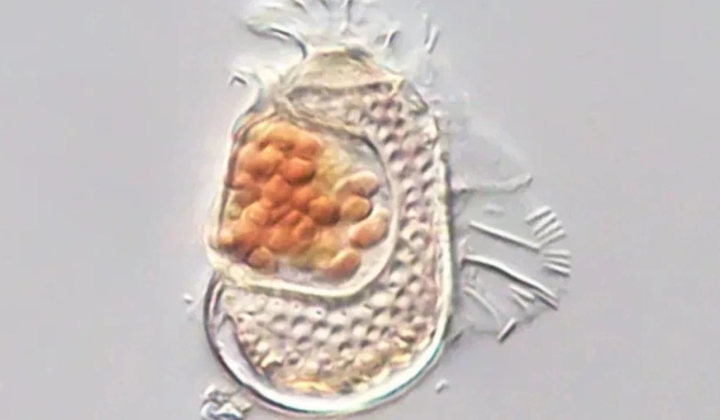
The study focused on the unicellular plankton species Citharistes regius, within which the genome of Sukunaarchaeum mirabile was sequenced. Remarkably, this archaeon's genome is the smallest recorded among known archaea. Its genetic makeup suggests a heavy reliance on another organism, indicating a likely parasitic lifestyle. The microorganism has nearly entirely lost genes responsible for metabolism and independent energy production. About 25% of its genome is dedicated to synthesizing large membrane proteins, similar to those found in another archaeon believed to be parasitic.
Currently, Sukunaarchaeum mirabile has only been studied through genetic sequencing; microscopic observations have yet to be conducted. Researcher Thorsten Allers highlighted the significance of this discovery:
"This finding sheds light on the minimal amount of genetic information needed for a living cell to reproduce and maintain its genome."
These insights offer new perspectives on evolutionary biology and the complex roles microorganisms play within marine environments.
The identification of Sukunaarchaeum mirabile emphasizes the intricate diversity of life in the ocean and the evolutionary challenges posed by parasitism and symbiosis. Understanding such microorganisms could revolutionize our knowledge of single-celled life forms, their evolutionary pathways, and their ecological impacts. Additionally, this discovery raises important questions about the genetic limits necessary to sustain life, holding promising implications for future genetic and evolutionary research.

Read also