Scientists Uncover How a Jellyfish Heals Wounds Without Leaving Scars

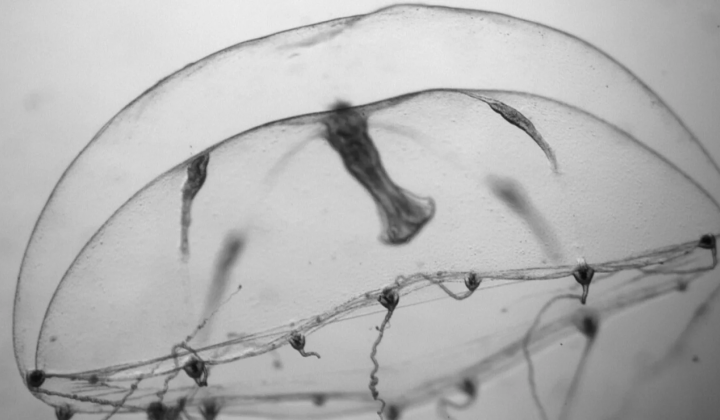
Study on the Jellyfish Clytia hemisphaerica
According to НВ — Техно: July 2, 6:30 PM
Researchers have identified the biological mechanism behind the scar-free wound healing of a particular jellyfish species. Published in the journal Molecular Biology of the Cell, the study focused on the jellyfish Clytia hemisphaerica and revealed that wound closure relies on lamellipodia and an actomyosin ring. This coin-sized jellyfish lacks both an immune system capable of triggering inflammation and any blood capillaries, making its healing process distinct.
The research was led by Jocelyn Malamy, an associate professor at the University of Chicago, who first observed the migration of jellyfish cells to seal a tissue tear a decade ago. Healing in Clytia jellyfish is driven by two cellular structures: actin-rich lamellipodia and an actomyosin ring. A key component of this process is the basement membrane, which provides the necessary foundation for tissue regeneration.
Unique Healing Processes
Micro-wounds that pierced just a single cell closed within 3 to 5 minutes, demonstrating the remarkable efficiency of this system. The study also found that Clytia lack blood vessels and inflammatory responses, setting their healing apart from that of other organisms.
'Many of the processes we see in wound healing in Clytia are very similar to what is observed in all other systems, including mammals.' - Jocelyn Malamy
She also emphasized that 'this is a truly elegant mechanism, where the system can quickly adapt to heal any wounds that occur in nature.'
In future work, Jocelyn Malamy plans to uncover the mechanism behind basement membrane repair, which could open new avenues for studying wound healing in other organisms.
The study of the jellyfish Clytia hemisphaerica is expanding the horizons of how scientists understand healing and regeneration in biology. Gaining insight into the mechanisms that allow these creatures to avoid scarring could provide valuable knowledge for medicine, particularly in treating injuries and improving human wound recovery.
Exploring the basement membrane and its role in regeneration may be key to developing new therapeutic strategies that enhance tissue repair across various living organisms.

Read also