Fish Brain Signal Found to Predict Social Behavior Before It Happens

Zebrafish Brain Research Yields New Insights
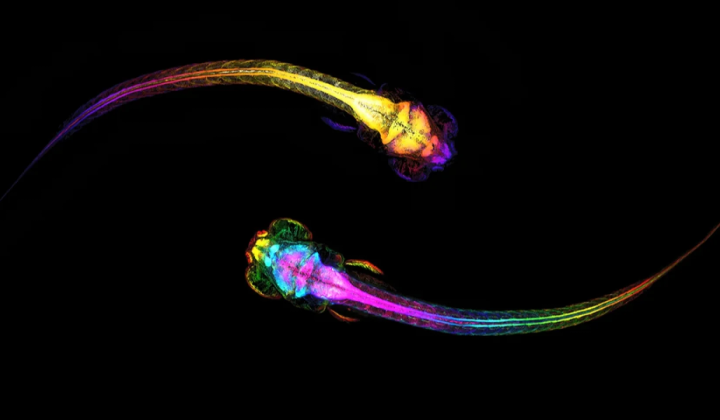
According to НВ — Техно: On June 17 at 1:30 PM, scientists at the Hebrew University of Jerusalem published findings on how zebrafish brains operate during social encounters. They discovered that a burst of neural activity in the pallium-a brain region linked to complex behaviors-occurs several seconds before a fish moves toward another. This signal can reliably forecast social movement. When pallium cells were destroyed using a laser, the fish stopped engaging socially. Notably, the signal was stronger in more sociable individuals, suggesting a direct link between neural firing and social tendencies.
Why Zebrafish Matter in Neuroscience
Zebrafish serve as a key model for studying vertebrate brain function because they share biological similarities with humans. In the experiment, one fish was held in place for detailed brain monitoring while others swam freely around it. Neural activity surged in the pallium just before contact, while other brain regions showed reduced activity. No such signal appeared when fish simply followed a moving dot, indicating the response is specific to social interaction.
This research reveals a brain activity marker that emerges before movement begins. Social contact occurred more frequently when the fish moved in sync. As researcher Lielach Avitan explained,
“This signal can predict not only whether the next action will be social, but also how strongly a particular individual is inclined toward social behavior.”
Further studies are needed to explore how development, experience, genetics, chemical signals, and internal states influence this behavior. The processes were observed only in zebrafish, highlighting their value in studying social behavior across species.
These findings carry significant implications for understanding social behavior not just in fish, but in more complex organisms, including humans. Investigating the neural mechanisms behind social interaction could lead to new treatments for social disorders. Future experiments with zebrafish may expand our knowledge of how social skills develop and how neural processes shape social behavior in other species. The results also underscore the importance of animal models in neuroscience for unraveling complex behaviors.
Understanding the neural mechanisms behind social behavior in zebrafish could also shed light on evolutionary adaptations in other species. For instance, insights gained from robotic fish research at Cambridge reveal how such developments may influence the transition from aquatic to terrestrial locomotion. This connection emphasizes the importance of studying social interactions across different species, enhancing our comprehension of behavioral evolution.

Read also