Scientists Discover a Biological Clock That Controls Worm Development

Uncovering a Developmental Timer in the C. elegans Nematode
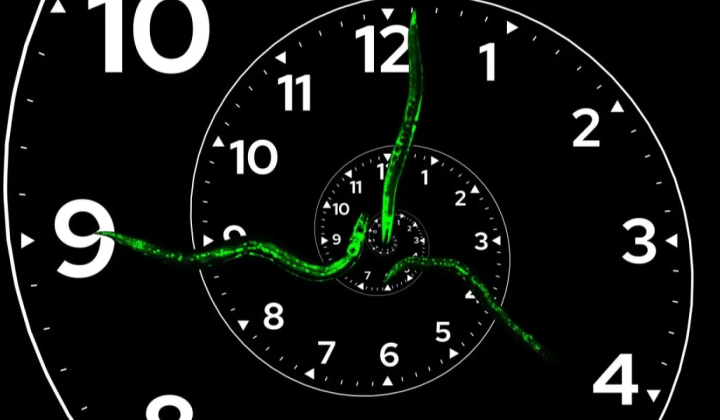
According to НВ — Техно: June 15, 4:05 PM. Researchers have identified a biological clock that orchestrates the development of the C. elegans worm. This clock is built from two proteins, MYRF-1 and LIN-42, which create a feedback loop that dictates the timing and duration of gene expression pulses during each developmental stage. It marks the first known instance in science of a clock that counts down a finite sequence of events.
The Roles of MYRF-1 and LIN-42 Proteins
Earlier work from the same lab had already shown that C. elegans development proceeds in waves-pulses of gene activity. This new study explains how those pulses are coordinated. The two proteins, MYRF-1 and LIN-42, form a feedback loop that acts as a central developmental timer. According to the researchers,
“this is a central clock for all the worm’s cells”
as noted by Christopher Hammel.
According to the study, the MYRF-1 protein serves several critical functions:
- It triggers each new wave of gene activity;
- It provides a checkpoint to ensure each growth stage is completed.
When a pulse begins, MYRF-1 activates LIN-42, which then regulates the intensity and duration of that pulse.
“MYRF-1 is part of the master regulatory clock for all cells, but it also acts as a master key for each growth stage”
Hammel emphasized.
When researchers blocked MYRF-1, the entire development process came to a halt. The team, now joined by CSHL Director of Research Limor Joshua-Tor, is investigating how MYRF-1 and LIN-42 physically interact and whether individual cellular clocks communicate with each other. Hammel remarked:
“During normal development, each of these independent cellular clocks appears synchronized. But do they talk to one another? We never really thought deeply about that question before.”
This discovery could have major implications for understanding how living organisms develop, as it reveals new aspects of gene activity regulation. Studying how biological clocks function in other organisms may also lead to fresh insights into the evolution of cellular processes. Further research in this area will help clarify how cellular mechanisms interact within complex developmental systems.

Read also