Late Cretaceous Continental Magmatic Arc Discovered in Northwestern Iran’s Azerbaijan Region

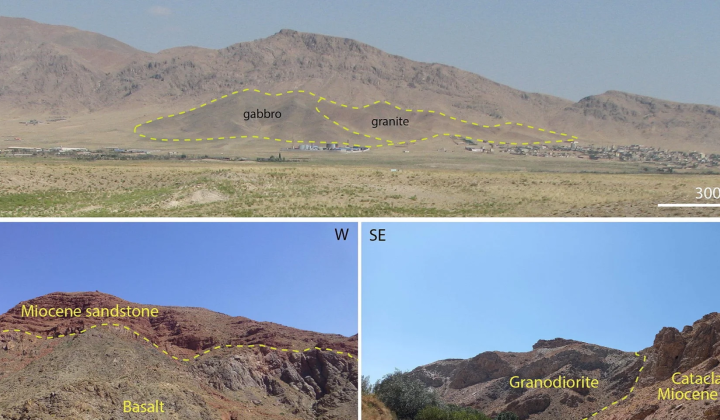
Identification of the Azerbaijan Continental Magmatic Arc
According to НВ — Техно: An international team of researchers, led by Istanbul Technical University, has uncovered a previously unknown late Cretaceous continental magmatic arc in northwestern Iran. This newly identified geological feature, named the Azerbaijan Continental Magmatic Arc, provides crucial insights into the tectonic evolution of the collision zone between the Arabian and Eurasian lithospheric plates. The findings were published in the journal Geoscience Frontiers.
Research Approach and Findings
The volcanic arc was active between approximately 101 and 97 million years ago, during the development of the ancient Neotethys Ocean. Researchers found that geological evidence of the arc had been obscured by later tectonic deformation, water erosion, and younger magmatic activity from the Eocene epoch. Their comprehensive study focused on volcanic and intrusive magmatic rocks in northwestern Iran, particularly in areas such as:
- Siakh-Cheshmeh fault zone
- Khoy
- Misho
- Tabriz
The investigation employed diverse analytical techniques, including uranium-lead zircon dating, hafnium isotope analysis, and geochemical characterization of rock samples. These methods revealed underlying magmatic processes driven by the subduction of one lithospheric plate beneath another.
"Our study reveals a far more intricate magmatic history in this region than previously recognized. By integrating geochronological and isotopic data, we were able to detect the arc's remnants despite overprinting by later geological events," stated Dr. Ali Mohammadi.
This discovery significantly advances understanding of the region’s geological framework.
The identification of the Azerbaijan Continental Magmatic Arc marks a vital development in reconstructing the geological past of Iran and its neighboring areas. Gaining deeper knowledge of ancient tectonic processes not only aids in anticipating future geological phenomena but also supports ongoing scientific research in geodynamics and natural resource exploration. This work highlights the complex interplay of lithospheric plates and the intricate geological structures formed as a result, offering valuable information for geologists and resource specialists alike.

Read also