Earth’s Inner Core Has Unexpectedly Reversed Its Rotation Direction

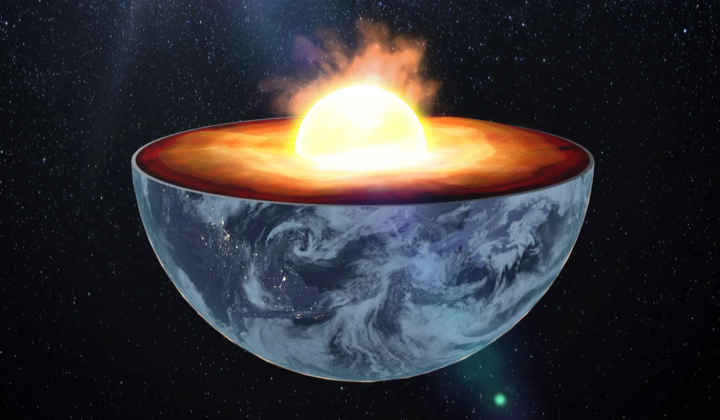
Investigating Magnetic Processes in Earth’s Core
According to НВ — Техно: July 7, 1:00 PM
By analyzing nearly three decades of magnetic measurements, researchers discovered that in 2010, a vast zone of molten iron beneath the equatorial Pacific Ocean shifted its flow from westward to eastward. After 2020, this eastward current began to weaken. The cause of this shift remains unknown. The data used in the study came from ground-based observatories and satellites operated by the European Space Agency, particularly its Swarm mission.
These recorded changes occurred at a depth of roughly 2,200 kilometers below the Earth’s surface. The planet’s outer core consists of liquid iron, whose movement generates the Earth’s magnetic field. Scientists emphasize that these processes pose no threat to humans or the climate.
Potential Scientific Implications
Researchers are now working to determine whether this shift was a temporary event, part of a natural cycle, or a new stable state of circulation within Earth’s core, according to Frédéric Dal Madsen of the University of Edinburgh. He also noted that models indicate the eastward flow began to slow after 2020.
This discovery opens up new avenues for further research in geophysics and for understanding the magnetic processes taking place deep inside our planet. - Frédéric Dal Madsen
Studying magnetic processes in Earth’s core is a crucial step in understanding geophysical phenomena, as they can influence the planet’s magnetic field, which shields it from cosmic radiation. Grasping these changes may help scientists better predict future shifts in the magnetic field and their potential impact on technologies that rely on its stability, such as navigation systems and communications.
As scientists delve deeper into the complexities of Earth's magnetic processes, it's essential to recognize that our planet faces a myriad of challenges. Beyond core dynamics, new studies reveal that Earth is threatened by factors beyond just asteroid impacts. Understanding these diverse risks can provide a broader context for the ongoing research in geophysics. For a detailed exploration of these emerging threats, read more about the potential dangers facing our planet beyond asteroid impacts.

Read also