Laser Technique for Metal Blending Invented by U.S. Physicists

A New Way to Combine Metals
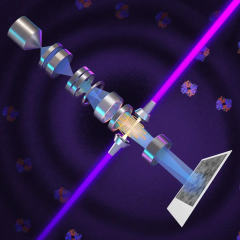
According to НВ — Техно: On June 5 at 19:45, a team of American physicists unveiled a laser-based method for blending metals to produce high-entropy alloys. The technique relies on guiding a 3D printer’s laser along looping paths rather than straight lines. This novel approach was successfully tested using a mixture of RHEA-19 alloy and titanium, with the findings published in the journal Additive Manufacturing.
Led by Ho Yeung, the research team employed a laser synthesis method on a powder bed. A key breakthrough involved programming the 3D printer’s laser to move in loops instead of the conventional straight-line trajectory. To achieve this, the scientists developed custom software from scratch, as standard programs lacked the necessary path settings.
Material fusion was monitored at Argonne National Laboratory using X-rays from the Advanced Photon Source, a facility with brightness 500 billion times greater than that of medical X-ray machines. Electron microscopy confirmed the uniform formation of the material, a critical factor for achieving the desired alloy properties.
High-entropy alloys require mixing all the way down to the atomic level. Extra effort is needed to force the metals to merge together in such proportions.
Physicist Fan Zhang
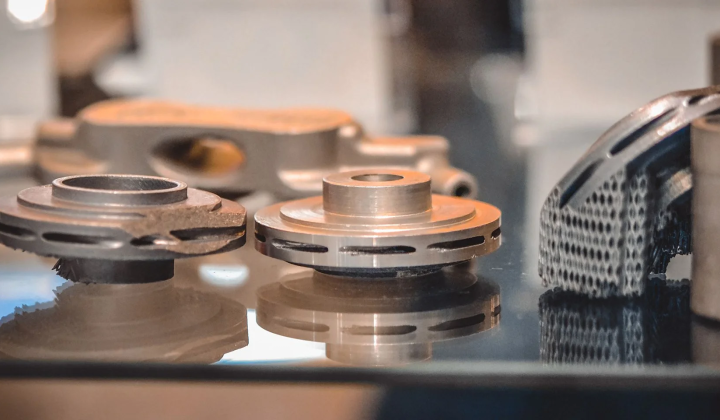
Ho Yeung added: 'We aim to accelerate alloy production. Metal 3D printing has the potential to create parts that were previously impossible to manufacture.' This new approach to metal blending opens up fresh possibilities for developing materials with enhanced performance across various industrial sectors.
Industry Impact of Emerging Technologies
The adoption of novel techniques for producing high-entropy alloys could significantly influence fields such as aviation, automotive manufacturing, and energy. The ability to create alloys with unique properties paves the way for innovative engineering solutions, potentially reducing weight and improving material efficiency. It may also lower production costs and boost the global competitiveness of end products.

Read also