eNPS – what it is and how to measure employee satisfaction

In modern companies, employee satisfaction and engagement have become critically important for achieving business results. Overall, a high level of employee engagement directly affects productivity, quality of task performance, and talent retention.
One of the modern tools for assessing satisfaction is eNPS (Employee Net Promoter Score) — a method that allows for a quick and simple determination of the level of employee satisfaction and their willingness to recommend working at the company to others. eNPS is becoming an integral part of the HR strategy in many international and Ukrainian companies, helping to create a more transparent corporate culture and enhance personnel management efficiency.
What is eNPS and why is it used
eNPS — is an indicator that measures employees' willingness to recommend their company as a workplace. Its primary objective is to determine the level of employee engagement and satisfaction with working conditions. Unlike traditional satisfaction surveys, eNPS focuses on a key question: «How likely are you to recommend our company as an employer to friends or acquaintances?».
Using eNPS allows companies to:
- quickly receive feedback from employees;
- identify «promoters», «passives» and «detractors» among the staff;
- detect problem areas in corporate culture and managerial practices;
- make informed decisions about improving working conditions and motivation.
Thus, eNPS is especially beneficial for large companies, where traditional surveys often take a lot of time and do not provide specific data for operational analysis.
How eNPS differs from regular employee satisfaction surveys

Traditional employee satisfaction surveys typically include a wide range of questions regarding working conditions, salary, interaction with management, corporate bonuses, and career opportunities. Such surveys provide a comprehensive picture, but they:
- take more time;
- require complex data processing;
- do not always allow for quick responses to issues;
- may be less accurate due to socially desirable responses.
Thus, eNPS stands out for its simplicity and focus on one key question. This allows for a clear indicator of employee engagement that can be easily compared across departments, locations, and time periods. The eNPS approach helps to identify trends faster and concentrate on those aspects that directly affect the recommendation of the company as an employer.
Methodology for calculating eNPS
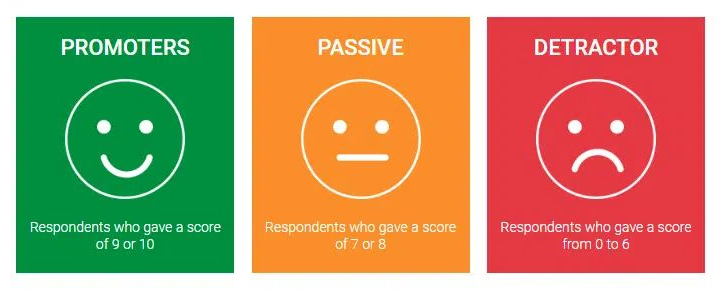
The calculation of eNPS is based on classifying employees according to their ratings on a scale from 0 to 10:
- Promoters — rating 9-10: very satisfied, ready to recommend the company;
- Passives — rating 7-8: satisfied, but not actively supporting the company;
- Detractors — rating 0-6: dissatisfied or risky employees who may spread negativity.
The result can vary from -100 to +100. A positive value indicates a predominance of satisfied employees, while a negative one indicates a high level of dissatisfaction, signaling the need for intervention by the HR team and management.
How eNPS is implemented in companies

The implementation of eNPS involves several stages:
- Preparation and planning. Determine the frequency of surveys (quarterly, semi-annually), channels for conducting (online platforms, mobile apps), and measurement goals.
- Communication with employees. It is important to explain that the survey is confidential, and the results are used to improve working conditions and corporate culture.
- Conducting the survey. Employees rate their willingness to recommend the company on a scale from 0 to 10 and can leave comments.
- Analysis of results. eNPS is calculated, promoters, passives and detractors are segmented, problem areas are identified.
- Actions based on results. Improvement plans are developed, HR processes are adjusted, and development and motivation programs are initiated.
Regular monitoring of eNPS allows tracking changes in employee satisfaction and promptly responding to new challenges.
The impact of eNPS on corporate culture and employee engagement
eNPS helps companies create a transparent and open corporate culture where every employee's voice matters. An increased level of promoters indicates loyalty and engagement among the staff, positively affecting productivity, creativity and teamwork.
Regular use of eNPS allows to:
- identify management and communication problem areas;
- reduce employee turnover;
- improve interaction between management and staff;
- form a positive employer brand that attracts talent.
Companies that systematically apply eNPS not only gain a digital indicator of satisfaction but also have an effective tool for developing HR strategies, enhancing motivation, and achieving long-term business success.
Examples of successful use of eNPS in well-known companies
Many leading global companies actively use eNPS to measure employee satisfaction and engagement. For example, Microsoft has implemented regular eNPS surveys across all divisions, allowing for real-time tracking of employee mood and loyalty. Based on this data, the HR team formulates specific initiatives: from development and training programs to changes in corporate culture that enhance motivation and reduce turnover.
Adobe uses eNPS as part of its talent attraction and retention strategy. The company combines surveys with detailed analysis of comments to identify problematic aspects of work within departments and quickly implement changes. This not only increases satisfaction levels but also fosters a culture of open dialogue between management and employees.

In the local context, Ukrainian IT companies such as EPAM Systems and SoftServe also actively apply eNPS. Regular surveys allow assessing the level of employee engagement in project activities, evaluating the effectiveness of internal communications and corporate events. Based on the results, support and talent development programs are created, as well as measures to improve the balance between work and personal life of employees.
Beyond the IT sector, eNPS is also successfully used by companies in retail, banking and manufacturing. For instance, Zappos has integrated eNPS into its regular employee survey system, allowing the company to assess employee satisfaction with working conditions and corporate culture. As a result, the company forms a high level of employee loyalty and maintains a strong employer brand.
Mistakes in implementing and interpreting eNPS

Despite the effectiveness of eNPS, companies often make typical mistakes when implementing and analyzing results. One of the main issues is ignoring the context of evaluations. A high or low eNPS can have different meanings in different departments or countries, and simple comparisons without considering team specifics can lead to erroneous conclusions.
Another common mistake is the lack of regularity. A one-time survey does not provide a real picture of employee satisfaction and engagement, whereas regularly conducting eNPS allows tracking dynamics and the effectiveness of measures taken.
Additionally, companies often do not respond to the results. Surveys are conducted, but the obtained data is not analyzed or used for practical changes. This can negatively affect employee trust and reduce the effectiveness of subsequent surveys.

Another mistake is inadequate communication with staff. If employees do not understand the purpose of the survey or doubt its confidentiality, they may provide inaccurate or socially desirable responses.
To avoid these mistakes, it is necessary to:
- ensure regularity of surveys;
- consider the context of departments and local specifics;
- analyze results and implement specific actions;
- communicate the purpose and confidentiality of the survey transparently to employees.
Such an approach allows eNPS to become an effective tool for managing employee engagement and enhancing corporate culture.

Read also