EVP - What is it and how is the Employer Value Proposition formed


Modern business is a symbiosis of core activities and the ability to manage employees. Today, companies are forced not only to offer jobs but also to create unique conditions that attract people and keep them around for a long time. This is where EVP – Employee Value Proposition – plays an important role.
In general, EVP has become an integral part of the human resource management strategy and corporate branding. A well-formed EVP allows a company not only to attract the attention of the best candidates but also to maintain a high level of loyalty among current employees.
What is EVP and what role does it play in a company
It is worth starting with the fact that while employers used to focus mainly on salary, today corporate culture, development opportunities, flexibility, concern for employee well-being, and company values also matter. EVP is a comprehensive system of mutual benefit between the employer and the employee that determines why this particular company should be chosen as a workplace.

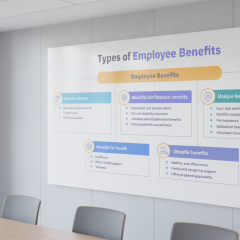
EVP (Employee Value Proposition) is the sum of material and non-material benefits that a company offers its workers in exchange for their competence, engagement, and work results. In other words, it answers the question: "Why should a specialist work in this company rather than with competitors?" The structure of EVP can have various components - from salary level, bonuses, and social packages to the atmosphere in the team, career growth opportunities, and the value-based mission of the company.
The role of EVP in a modern organization is hard to overstate. It is a tool that shapes the image of the company as an attractive employer in the labor market. It creates an emotional connection between the employee and the company's brand, increases job satisfaction, and facilitates more effective communication within the team. EVP becomes part of the strategic HR and marketing policies, as it is thanks to it that the organization builds the reputation of an employer that values its people.
Companies with strong EVP have lower turnover rates and attract more candidates without the need to spend large budgets on job advertisements. Employees of such organizations feel that their contributions are noticed, recognized, and valued, which means they are more motivated to achieve high results.
How EVP differs from employer branding and corporate values
Another important nuance. The concept of EVP is often confused with employer branding or corporate values, but there are significant differences between them. Employer Brand is the overall perception of the company in the labor market, its reputation among candidates and employees. It is how the company is seen from the outside. EVP, on the other hand, is the internal core of this brand, that is, the specific promises and benefits that the company actually provides to its employees.
If the employer brand is the "wrapper," then EVP is the "filling." Without a strong and credible employer value proposition, the brand will not have a real foundation. People may be attracted to appealing advertising campaigns or external communication, but if what is promised is not substantiated within the company, employees quickly become disillusioned, and the reputation suffers.

Corporate values, in turn, are the fundamental principles on which the company's activities are built, its mission, vision, and approach to work. They define employee behavior but are not a direct "offering." EVP encompasses these values but also supports them with specific benefits and opportunities for workers – development, stability, flexible schedules, recognition culture, mental health support, etc.
Thus, EVP is a more practical and strategic element that shapes the employer brand based on corporate values and the real experiences of employees.
Key components of EVP
EVP usually includes five key elements: compensation, career opportunities, work environment, company culture, and work-life balance. Here's what it's all about:
- Compensation and benefits. This is a basic but important aspect – salary, bonuses, medical insurance, vacations, social packages. They create the material foundation for motivation.
- Career development. People strive not to stand still. Opportunities for learning, undergoing training, receiving promotions – this is a key factor in retaining employees.
- Work environment. It is important not only the physical convenience of the workplace but also the atmosphere in the team, trust, mutual respect, and leadership style.
- Corporate culture. This describes how the company treats people, how it supports initiative, reacts to mistakes, and whether there is openness to new ideas.
- Work-life balance. Flexible schedules, remote work formats, and mental comfort support are modern trends without which it is impossible to build an effective EVP.
Some companies add one more component – a social mission. Young generations of employees are increasingly looking for jobs where they feel that their work has value for society.
How EVP is formed in a company
Creating an EVP is a strategic process that requires deep analysis of both the internal environment of the company and the external labor market. The first step is to research employee opinions: what they value in work, what benefits they see, and what they would like to change. Surveys, interviews, and focus groups help understand the real expectations of personnel.

Next, the company analyzes its strengths that can serve as the foundation for the EVP and determines what sets it apart from competitors. Then, a communication strategy is formed on how to convey this value proposition to internal and external audiences. It is important that the EVP is not just a slogan but a real part of corporate life.
For example, if a company promises "development opportunities," it must genuinely invest in employee training. If it declares a "work-life balance," it should implement flexible scheduling policies or mental health support. A successful EVP is formed not top-down but through interaction among HR specialists, management, and employees.
The impact of EVP on employee engagement, retention, and motivation
A strong EVP directly influences team productivity and stability. When employees feel that the company values them, supports them, and fulfills its promises, they become more engaged and loyal. This reduces stress levels, turnover rates, and costs related to hiring new specialists.
EVP also enhances motivation – employees are more willing to put in effort when they see meaning in their work. Companies that systematically work on their value proposition gain a competitive advantage: their teams show higher productivity, and the employer brand earns trust among job seekers.
Research shows that employees who feel alignment between their own values and the company's EVP are several times more likely to stay at the job longer than three years. Thus, the employer's value proposition is not just an HR tool, but a fundamental part of the business strategy that determines the organization's success in a world where human capital is the main resource.
Examples of successful EVP from well-known companies
Today, the employer value proposition (EVP) has become an important element of successful global companies' strategies. Thanks to a clearly articulated EVP, companies can attract the best specialists, reduce turnover, and build a strong employer brand. The best examples demonstrate that an effective proposition is not just a set of beautiful words but real actions, corporate culture, and experiences that employees receive.
One of the most famous examples is the company Google. Its EVP is based on innovations, creative freedom, and unique development opportunities. The company offers employees not only high salaries but also flexible schedules, space for self-realization, creative offices, and a culture of mutual support. Google shows that the main value is people, not just technology. This is why it remains one of the most attractive employers in the world.

Another example is Microsoft, which focuses on the concept of "Empower every person to achieve more." Its EVP combines innovation with care for personal development and employee well-being. Microsoft actively implements hybrid work formats, mentorship, and training programs, which enhances employee engagement and creates a sense of significance for everyone.
The company Unilever builds its EVP around sustainable development and social responsibility. It attracts specialists who want to work in an organization that makes the world a better place. Its main message: "Your work matters." Employees feel a part of a global mission, which significantly enhances loyalty and motivation.
We cannot overlook Netflix, which openly proclaims its policy of "Freedom and Responsibility." This means that employees are given maximum autonomy but are expected to achieve high results. This approach creates an atmosphere of trust where people strive to exceed expectations.
Each of these examples shows that a successful EVP must be sincere, practical, and correspond to reality. When employer promises align with real employee experiences, the company gains a strong reputation and a stable team that does not seek "better opportunities" in the market.
Mistakes in developing and implementing EVP
Despite the popularity of the EVP concept, many companies make typical mistakes when creating or implementing it. The most common of these is the lack of deep analysis of employee needs. When management formulates EVP "from their vision" without considering employee opinions, such a proposition does not inspire trust and does not work in practice.
The second mistake is too vague or template-based formulations. For example, promises like "we value people" or "we have a friendly atmosphere" lack specificity. Employees expect real evidence: training programs, career growth, flexible schedules, bonuses, or corporate events.
Another problem is the discrepancy between promises and reality. If a company declares care for work-life balance but actually overloads employees beyond normal, it destroys trust in the employer brand. As a result, turnover increases, and reputation deteriorates.
Another mistake is the lack of communication of the EVP within the company. Even the best value proposition will have no effect if employees do not know about it or do not understand how it is implemented. It is essential that HR, managers, and leadership convey messages uniformly and demonstrate values through their actions.

Some organizations neglect to regularly update their EVP. Over time, employee expectations, labor market conditions, and company strategic objectives change. Therefore, the value proposition must be reviewed at least every few years to remain relevant.
And finally, another typical mistake is the lack of measurable effectiveness indicators for the EVP. Without clear evaluation criteria, it is impossible to determine whether the strategy is working. Companies that analyze levels of engagement, satisfaction, turnover, and brand index can timely adjust their actions and achieve better results.

Read also