What Dictionaries and Literary Classics Reveal About Feminine Nouns in Ukrainian

Language Matters: Feminine Forms and Spelling Rules
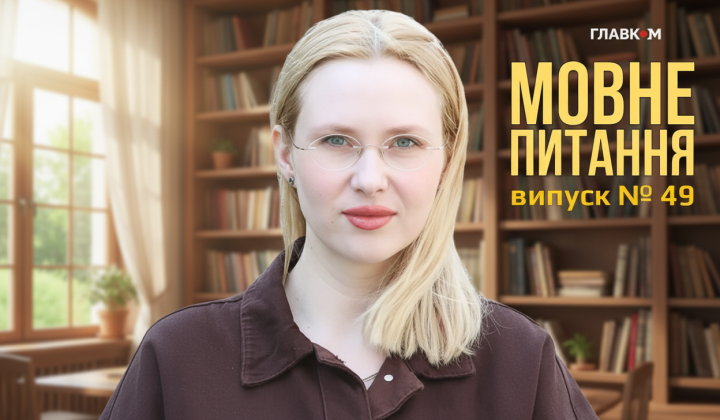
According to Главком: In the 'Language Matters' column on the 'Glavcom' website, philologist Olha Vasylieva answers readers' questions about the Ukrainian language, including topics like feminine nouns, spelling, and word usage. This weekly feature invites questions to be sent to [email protected] with the subject line 'Language Matters'.
Yuliia Chernobrov, head of the National Commission on State Language Standards, has clarified that the Ukrainian orthographic code does not mandate the creation of feminine-gender nouns for professions but merely provides suffixes for their formation. This stance has sparked ongoing debate among linguists and the wider public regarding the use of these feminine forms.
The 'Russian-Ukrainian Dictionary' by A. Krymskyi and S. Yefremov (1924–1933) included numerous words that qualify as feminine forms, such as:
- delegate (delehatka)
- instructor (instruktorka)
- inspector (inspektorka)
- printer (drukarka)
- bricklayer (muliarka)
- doctor (likarka)
- tester (vyprobovuvachka)
- teacher (vykladachka)
- professor (profesorka)
- democrat (demokratka)
- voter (vybornytsia)
- legislator (zakonodavytsia)
- official (chynnytsia)
- factory owner (zavodovlasnytsia)
- benefactor (koshtodavytsia)
- performer (vykonavytsia)
Prominent Ukrainian authors also employed feminine forms in their works. Iryna Vilde used the word 'editor' (redaktorka) in her novel 'The Richynsky Sisters', and Olena Pchilka used the same term in a 1906 letter to Lesia Ukrainka. Furthermore, Hrinchenko's dictionary contains about a hundred words beginning with the letter 'y' (и). However, the orthographic rules in §2 permit only four such words: 'Herod' (yrod), 'paradise' (yrii), 'to hiccup' (ykaty), and a specific suffix (ych).
Investigating word usage reveals the term 'defeatist' (porazhenets), which appears in the Dictionary of the Ukrainian Language (SUM-20) with the notation 'Same as poraznyk'. The word 'poraznyk' is found in 20th-century text corpora, primarily in translated literature. For instance, it was used in the 1972 translation of Heinrich Böll's 'Group Portrait with Lady' published in the journal 'Vsesvit'.
Historically, the word 'descendants' (potomky) was used by notable figures like P. Kulish and I. Nechui-Levytskyi. However, the frequency of the synonym 'offspring' (nashchadky) in text corpora is ten times higher, indicating shifts in the usage of Ukrainian vocabulary in the modern linguistic landscape.
Readers' Questions
Questions submitted by readers include the following:
- 'Can we form the feminine noun 'pedestrian' (pishokhidka) from 'pishokhid'?' asks Vitalii Starovoit.
- Serhii Kliap inquires how to spell the word 'aloe' according to the new orthographic rules.
- Other questions concern the usage of terms like 'oilcloth' (kleionka), 'descendants' (potomky), and 'offspring' (nashchadky).
- Readers also ask about the appropriateness of the word 'defeatist' (porazhenets), used by a linguist online.
The 'Language Matters' column plays a vital role in promoting the Ukrainian language and its norms, offering the public a chance to get expert answers on linguistic issues. In the context of Ukraine's ongoing efforts to strengthen its linguistic identity, such initiatives help increase public literacy and awareness of language standards and innovations.

Read also