Rice-Growing Regions Face Unprecedented Heat Levels Not Seen in 9,000 Years Due to Global Warming

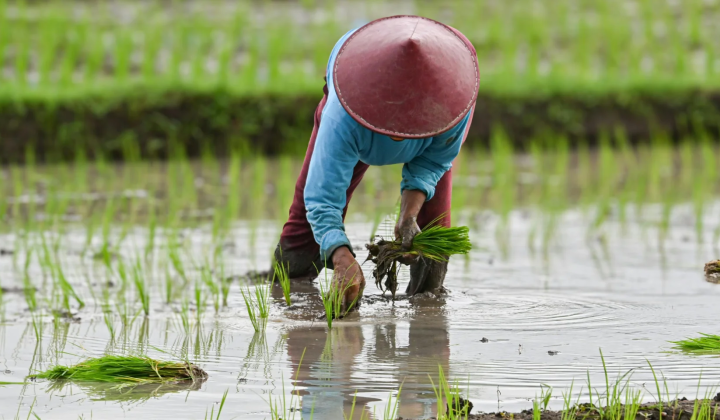
Global Warming Puts Rice Cultivation at Risk
According to НВ — Техно: A study published on May 24, 2023, reveals that climate change is threatening rice-producing areas. Researchers from the Florida Museum of Natural History found that the planet is warming roughly 5,000 times faster than rice can adapt through evolution. This raises serious concerns, as critical temperature thresholds for rice farming include:
- an average annual temperature above 28°C;
- an average maximum temperature during the warm season above 33°C.
When temperatures exceed 40°C, photosynthesis in rice stops, and the plant’s pollen becomes sterile.
Historical Perspective and Adaptation Challenges
The study analyzed data from 803 archaeological sites, showing how climate conditions have shaped rice cultivation over 9,000 years. Around 4,200 years ago, cold-resistant rice varieties emerged, allowing farming to expand into Korea and Japan. Today, 90% of the world’s rice is grown in Asia, and it provides 20% of daily calories for billions of people.
Lead author Nicholas Gautier noted:
“Adaptation is expensive, time-consuming, and not always pleasant.” - Nicholas Gautier
His comments highlight the difficulty and cost involved in helping rice adapt to shifting climates. Given these challenges, it is crucial to consider the potential impact of global warming on this staple crop, which is vital for food security in regions where rice is a dietary cornerstone.
It is also worth noting that ‘golden rice,’ which contains vitamin A, could help address deficiencies of this essential nutrient in many people’s diets. However, the question of how to adapt rice to new temperature extremes remains unresolved and requires further study and attention.
Global warming poses a serious threat to food security, especially in areas where rice is a primary food source. Rising temperatures expose rice farming to numerous risks, endangering not only the crop itself but also the billions of people who depend on it. Continued research in this field is essential, as adapting to climate change may prove critical to maintaining global food stability.

Read also