NYU Engineers Develop Amphibious Worm-Inspired Robot WorMa That Uses Water as Moving Ballast on Land and in Water

Introducing the Amphibious Robot WorMa
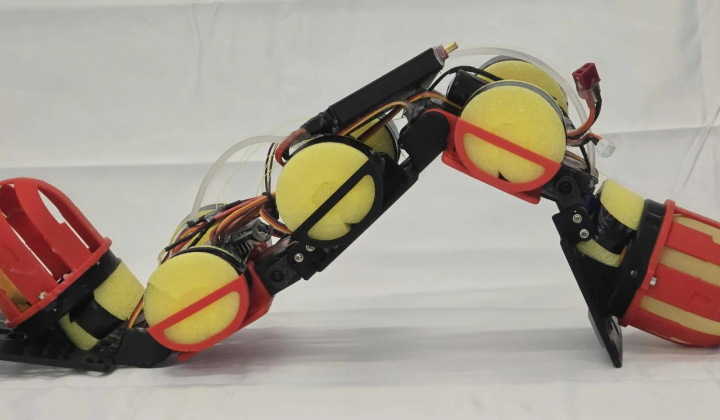
According to НВ — Техно: Engineers at New York University have created WorMa, a worm-shaped amphibious robot capable of adapting its movement on both land and in water. This cutting-edge design employs water as a dynamic ballast system, enabling the robot to redistribute its weight for optimized locomotion. Measuring about 50 cm in length and weighing just over 1 kg, WorMa consists of five segments connected by four joints.
Unlike other robots that switch gaits or mechanically change their structure, WorMa uses latex spheres positioned at its head and tail with a pump circulating approximately 300 grams of water between them. This innovative mechanism allows WorMa to overcome obstacles such as steps up to 15 cm high by shifting water weight between its front and rear. During demonstrations, the robot successfully navigated a course featuring flat terrain, steps, slopes, and open water.
Efficiency and Performance Benefits
By optimally adjusting the water distribution, WorMa reduces energy consumption by at least 33%. When the ballast is concentrated in the tail, the robot swims 26% faster and operates 52% more efficiently in water. On a 19.5° incline, WorMa climbs effectively when the water is shifted to the head. The development team is currently enhancing the pump system and integrating sensors to enable autonomous terrain recognition and adaptive control.
"You get a robot that doesn’t need mechanical reconfiguration every time the terrain changes. This could be crucial for environmental monitoring or infrastructure inspection, where a robot has to traverse dry land, obstacles, and water within a single mission." - Nana Obayashi
This project highlights new possibilities for amphibious robots, with potential applications in environmental research and infrastructure maintenance. Such versatile machines can operate in diverse environments, making them valuable tools for complex fieldwork.
WorMa exemplifies how innovation in robotics can address pressing challenges like ecological monitoring and infrastructure support. Its ability to adapt seamlessly across varied landscapes offers promising new avenues for research and environmental stewardship. As climate change and environmental protection demands grow, technologies like WorMa could provide vital solutions to navigate and monitor challenging terrains efficiently.
As the field of robotics advances, innovations like the soft starfish-shaped underwater robot further demonstrate the versatility of bio-inspired designs. While WorMa excels in both terrestrial and aquatic environments, this new robot showcases distinct movement modes tailored for underwater navigation, highlighting the diverse approaches being taken to enhance robotic mobility across different terrains.

Read also