Historian Antony Beevor Traces the Roots of Russian Army Brutality

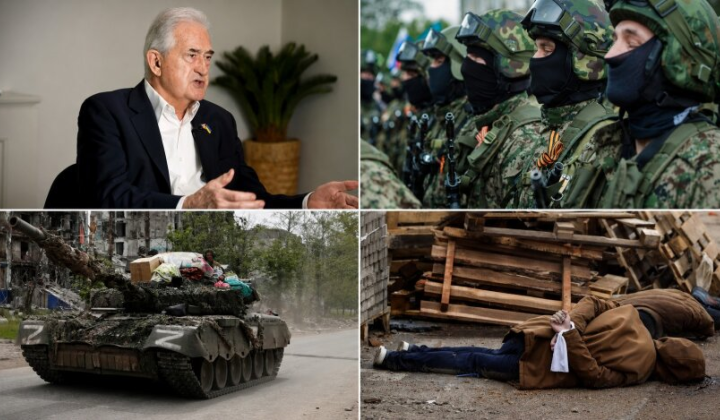
Antony Beevor Breaks Down Russia’s Military Culture
According to ХВИЛЯ: In an episode of the Triggernometry podcast, historian Antony Beevor explores the deep origins of Russia’s military conduct, linking it to the 13th-century Mongol invasions, the country’s isolation from Enlightenment ideals, and Soviet-era mentalities. He cites documented cases of brutal treatment toward Russian soldiers, the deployment of foreign nationals as cannon fodder in Ukraine, and draws parallels between President Vladimir Putin’s worldview and that of the Romanov empire. Beevor emphasizes the Time of Troubles, the reign of Nicholas II, Rasputin’s influence, and the potential consequences of the war for Russia.
The first Beevor interview on Triggernometry drew over a million listens. He argues that Russia’s style of warfare stems from the Mongol incursions of the 1200s, which forged a distinct combat approach. Meanwhile, 18th-century Europe underwent the Enlightenment, and the 19th century saw the codification of war through institutions like the Red Cross and the Geneva Conventions-developments that largely bypassed Russia, as captured in poet Fyodor Tyutchev’s famous line:
“Russia cannot be understood with the mind.”
Military History and Contemporary Challenges
According to Beevor’s research, Moscow archives from the 1990s revealed up to five thousand suicides annually among Russian conscripts. He also highlights brutal tactics used during World War II, particularly at the Battle of Stalingrad, where Russian snipers were ordered to shoot starving Russian orphans. During that battle, officers would seize civilians and press them into service without recording their names-only noting them if suspected of treason or desertion.
Nicholas II, who declared Russia must lag 200 years behind Western Europe, and his inner circle-including Rasputin’s sway-profoundly shaped the country’s political landscape. In January 1905, imperial guards fired on a procession led by Father Gapon in St. Petersburg, and Prime Minister Stolypin carried out mass executions known as “Stolypin’s necktie.” These events reflect the chaos and instability that marked Romanov rule.
Beevor contends that Putin’s mindset aligns far more with the Russian Empire than with the Soviet era. Konstantin Kisin notes that Putin is trying to restore the Russian Empire, signaling a return to imperial ambitions. Putin has also brought back and reburied the remains of several White Army generals, underscoring his focus on reviving the country’s historical memory.
Turning to modern challenges, Beevor points out that China is already redrawing maps, labeling Vladivostok and other cities in Chinese characters. This may signal shifting geopolitical realities and new pressures on Russia. Beevor stresses that the war’s outcomes could have severe implications for Russia’s future, given the historical forces that have shaped its current identity.
Beevor’s analysis underscores how historical factors-such as the Mongol invasion and the absence of Enlightenment influence-continue to shape Russia’s military and political culture. This research offers crucial context for understanding the ongoing conflict in Ukraine and Russia’s relations with other nations. At the same time, shifting geopolitics, especially China’s growing influence, pose fresh challenges to Russian statehood, with far-reaching consequences for the region and the world.
As the complexities of Russia's military culture come to light, it's essential to consider the recent acknowledgment from the Kremlin regarding its failed war objectives in Ukraine. This admission not only underscores the challenges faced by the Russian military but also reflects the historical patterns discussed by Beevor. To explore the implications of this shift and its connection to Russia’s military conduct, read more about the failure of Russia's war aims in Ukraine.

Read also