Italian Engineers Develop Robotic Arm for Lunar and Martian Missions

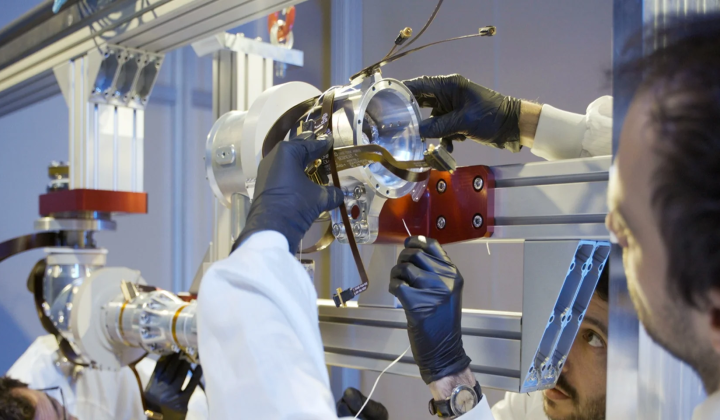
Introducing the STA Robotic Manipulator
According to НВ — Техно: On June 18, 2026, details emerged about a new robotic arm called the STA (Sample Transfer Arm), which measures 2.4 meters in length. Italian firm Leonardo is preparing the device for testing, with an eye toward future missions to the Moon and Mars. Designed to handle geological samples on these celestial bodies, this manipulator opens up fresh opportunities for studying their surfaces and composition.
Technical Specs and Global Collaboration
The STA robotic arm features seven degrees of freedom, enabling it to mimic the configuration of a human shoulder, elbow, and wrist. This gives the device exceptional flexibility and the ability to carry out complex tasks. A gripper at the end of the arm ensures millimeter-level precision when moving objects, a critical requirement for working with geological samples.
The technology was originally developed under a joint NASA and ESA program aimed at returning samples from Mars. As part of that initiative, the robot was intended to transport regolith collected by the Perseverance rover. Currently, Leonardo specialists are integrating systems at the company’s facility in Nerviano, near Milan. The project brings together companies from several countries, including:
- Spain
- Switzerland
- France
- Romania
- Denmark
- Greece
- Germany
This highlights the international nature of collaboration in aerospace technology.
In short, the STA robotic arm represents a major step forward in space exploration technology, paving the way for new scientific missions to the Moon and Mars. Successful deployment of this system could significantly boost the efficiency of collecting and analyzing geological samples, helping scientists better understand these celestial bodies and identify resources that might one day support colonization or other research efforts. The international cooperation behind this project also reflects the growing globalization of the aerospace industry, which could accelerate the pace and improve the quality of space research.
As the STA robotic arm sets the stage for innovative exploration, it's worth noting the advancements in humanoid robotics for space missions. The recent introduction of HELIOS, a new humanoid robot by Orbit Robotics, showcases how diverse robotic technologies are evolving to assist in outer space tasks. This development complements the efforts of the STA arm, highlighting the collaborative nature of modern aerospace engineering.

Read also