Seoul Researchers Boost Lactone Electrosynthesis Selectivity to 97% by Managing Local pH

Breakthrough Advances in Organic Electrosynthesis
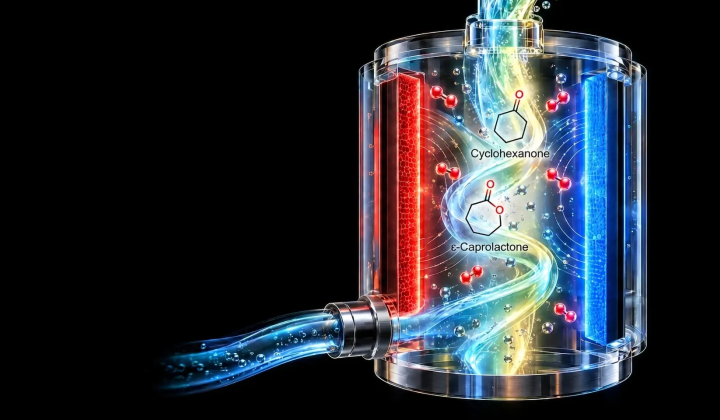
According to НВ — Техно: Led by Professor Jaeyoon Ryu from Seoul National University, an international research team has achieved a remarkable increase in the selectivity of organic electrosynthesis reactions, improving from just 16% to an impressive 97%. This leap was made possible through precise control of the local pH environment near the electrodes. Their findings, focusing on the production of lactones and epoxides, have been published in the Journal of the American Chemical Society.
Critical Impact of Local pH in Electrochemical Reactions
The study identified the acidity level near electrodes as a crucial chemical factor influencing reaction efficiency. Traditional lactone and epoxide synthesis often relies on hazardous chemical oxidizers. The innovative approach developed by the team instead employs oxygen and electrical energy under ambient pressure and room temperature conditions, offering a safer and more sustainable alternative.
During the electrochemical process, significant pH variations were observed: the cathode region exhibited a strongly alkaline environment with a pH around 11, while the anode area was highly acidic, with a pH near 2.5. To optimize the system, the distance between electrodes was reduced from 20 mm to 4 mm, which accelerated the reaction rate by a factor of 2.2. Additionally, controlled electrolyte circulation helped smooth out abrupt pH fluctuations, and fine-tuning the flow rate enhanced productivity by approximately 14 times.
"The success or failure of a chemical reaction often hinges on an overlooked factor - the local pH." Professor Jaeyoon Ryu
This scientific innovation holds significant promise for revolutionizing chemical manufacturing processes by minimizing hazardous reagent use and boosting environmental sustainability. Incorporating these new methods at an industrial scale could reduce costs and improve product quality, supporting the growth of greener production practices. Ongoing research and refinement are expected to expand the technology's applicability across diverse sectors.

Read also