Copenhagen has fully transitioned to electric public transport

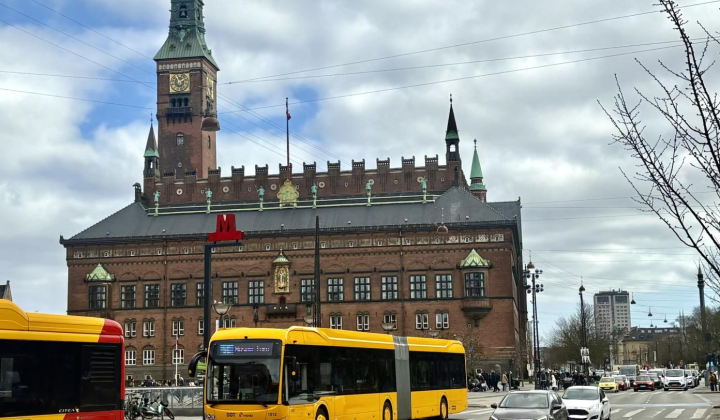
The capital of Denmark has completed the transition of the city's bus system to electric traction. From now on, all regular routes in Copenhagen are serviced exclusively by electric buses without the use of diesel, biogas, or other fuels. This is reported by Kobenhavns Kommune.
Copenhagen's Electric Buses: How the City Completed the Transition
The final stage was the conversion of the last routes that operated with internal combustion engines. This includes lines 5C and 19.
Route 5C is considered one of the busiest in Northern Europe - approximately 17 million passengers use it annually. To service it, 37 new electric buses were deployed. Another 15 vehicles were added to route 19, and for the suburban route 350S, 10 additional units were introduced.
Previously, 5C operated on biogas, but it has now fully transitioned to electricity along with other municipal routes. Line 19, which connects Glostrup, Frederiksberg, and Valbyparken, has also eliminated diesel buses.
37 electric buses added to route 5C
15 electric buses service route 19
10 electric buses operate on the 350S route.
Lord Mayor of Copenhagen, Sophie H. Welling, emphasized: «The fight for cleaner air has been crucial for me. The fact that the city now has a completely environmentally friendly public transport system without CO2 emissions is a significant milestone».
Electrification of Denmark's Transport: Costs and Scale
The project was implemented by the transport operator Movia, which set out in 2016 to fully electrify the bus network by 2025. Despite delays, the plan was successfully completed.
As of now, Movia's fleet includes 794 electric buses - about 72% of the entire fleet in the region. Regular transport within Copenhagen is now carried out exclusively by electric vehicles, with diesel buses remaining only as a backup.
To accelerate the transition, the city prematurely terminated part of the contracts with carriers. Compensation for the companies Arriva, Nobina, and Keolis amounted to:
from 37 to 49 million Danish kroner
approximately from 251.9 million to 333.6 million UAH.
Concurrently, staff adaptation took place. Drivers underwent training to operate electric buses without interrupting their regular duties. Meanwhile, there is a shortage of at least 700 drivers in Denmark, so new personnel are being trained specifically for electric transport.
Copenhagen has become one of the first major European cities where public transport has completely transitioned to electric traction. This decision is viewed as an important step towards climate neutrality and reducing air pollution.
It should be noted that in Denmark, Ukrainians who have temporary protection status until 2027 may consider several legal paths for legalization. To legalize in Denmark, an active CPR number linked to a current address is required. The time spent under temporary protection may be partially counted towards the duration for obtaining permanent residency.

Read also