NASA Captures Turquoise Transformation of the Black Sea Due to Plankton Bloom

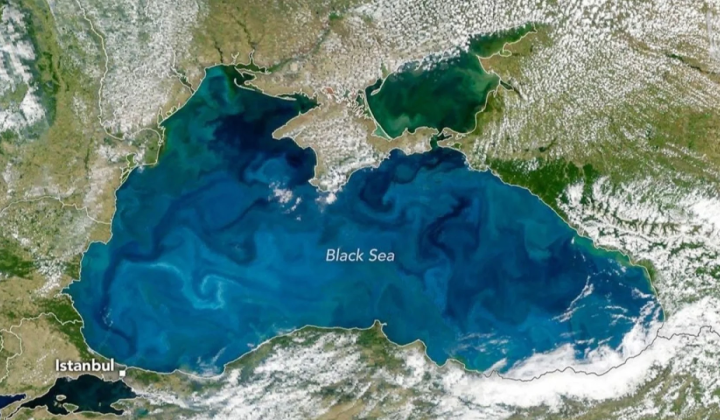
Massive Coccolithophore Bloom in the Black Sea
According to НВ — Техно: On June 22, 2026, NASA's PACE satellite observed a large-scale bloom of coccolithophores in the Black Sea, turning its surface a striking turquoise hue. This seasonal event, driven by microscopic plankton, is clearly visible from orbit. The coccolithophores responsible for the bloom are encased in calcium carbonate shells, which give the water its vivid color.
Ecological Shifts in the Black Sea
Situated between Europe and Asia, the Black Sea connects to the Mediterranean through a series of straits. Coccolithophores thrive in these waters during late spring and early summer, leading to extensive blooms. At other times of the year, diatoms with silica shells tend to dominate the region's phytoplankton community.
Additionally, on May 27, 2026, an astronaut aboard the International Space Station (ISS) captured a photograph of a bloom in the Bosphorus Strait. The satellite relies on its Ocean Color Instrument (OCI) to analyze the sea's color, enabling researchers to study changes in marine ecosystems. These observations offer critical insights into the dynamics of ocean life and their environmental impacts.
Coccolithophore blooms in the Black Sea serve as a key indicator of ecological changes in the region's waters. Such events can affect marine life, including food chains, and signal shifts in environmental conditions like water temperature and nutrient levels. Systematic monitoring from space allows scientists to better understand these processes and their broader implications for marine ecosystems.

Read also