Russia’s Night Assault on Ukraine Leaves 13 Dead and Over 90 Wounded

Massive Russian Strike Across Ukraine
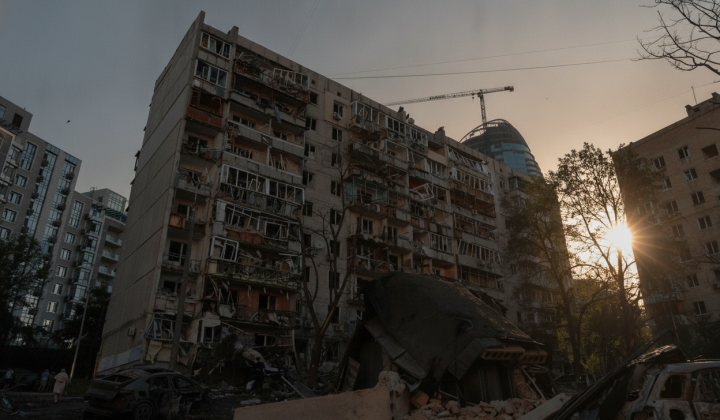
According to ХВИЛЯ: In the early hours of July 2, Russia launched a large-scale combined attack on Ukraine, resulting in 13 fatalities and more than 90 injuries as of 9 a.m. local time. The assault primarily targeted Kyiv, where over 20 sites were damaged, including residential buildings, an ambulance station, a research institute, a hotel, and various businesses.
According to reports, a total of 570 airborne threats were recorded during the strikes, comprising 74 missiles and 496 drones. The missile arsenal included the following types:
- 4 Zircon missiles
- 24 Iskander-M and S-400 missiles
- 34 Kh-101 cruise missiles
- 8 Kalibr cruise missiles
- 4 Kh-59/69 missiles
As for the drones, the following models were deployed:
- Shahed
- Gerbera
- Italmas
- Banderol
- Parody
Ukraine’s defense forces managed to intercept or suppress 524 of these targets, including 48 missiles and 476 drones. Specifically, they shot down:
- 4 ballistic missiles
- 32 Kh-101 missiles
- 8 Kalibr missiles
- 4 Kh-59/69 missiles
Additionally, debris from the attacks caused damage at 18 locations.
Beyond Kyiv, strikes were reported in the Kharkiv region, where 5 people were wounded-including a child-and in the Kyiv region, where 2 others were injured. The attacks also affected the Sumy, Dnipro, Zaporizhzhia, and Cherkasy regions.
Supplying air defense systems to Ukraine is an absolutely top-priority and critical issue.
Volodymyr Zelenskyy
The situation remains dire, and Ukrainian forces continue working to ensure security.
This assault ranks among the most extensive in recent months, highlighting Russia’s ongoing aggression in the context of the war in Ukraine. The emphasis on the need for air defense supplies underscores the urgent requirement to bolster Ukraine’s defensive capabilities to protect civilians and infrastructure. The current crisis calls for intensified international efforts to support Ukraine in safeguarding its security and stability.

Read also