Germany - worthy, outstanding and interesting places to visit

Germany remains a country that is popular among tourists from all over the world. Thus, the outstanding places in Germany attract thousands of tourists every year.
Moreover, interesting places in Germany will appeal even to experienced travelers. After all, the interesting places in Germany are very diverse.
Outstanding places in Germany
It is worth starting with the fact that everyone will have their own interesting places in Germany. That is to say, there are many options to choose from: the outstanding places in Germany also have a long history. Beautiful places in Germany are also interesting for adults and children.
Germany is a country with a rich history, architectural grandeur, and incredible natural beauty. It skillfully combines medieval castles with modern metropolises, green parks with high-tech centers, ancient legends with innovations. Traveling through this country is always a journey through time: from stone bridges and Gothic cathedrals to avant-garde architecture and the fast pace of large cities. A visit to Germany is not just an excursion; it is an opportunity to touch European culture, which has been shaped over centuries. Regardless of the season, each German city has its own special atmosphere that enchants guests from all over the world.
People come here to see the Brandenburg Gate in Berlin, the mysterious Neuschwanstein Castle, walk along the Romantic Road, or stroll along the Elbe River in Hamburg. Each city has its own character, its own legend, its own culture. Tourism in Germany is not only about sightseeing; it is also about getting acquainted with the local way of life, cuisine, traditions, and open-hearted people.
Germany attracts millions of tourists every year due to its wealth of historical, architectural, and natural monuments. In every corner of the country, there is something unique: ancient castles on mountain tops, world-class museums, music festivals, majestic cathedrals, narrow streets of cities that breathe history.
Therefore, the places worth visiting in Germany will be different for everyone. That is to say, everyone has their own TOP list. Or, preparing for such a trip, one can break the standard list of 'Germany's outstanding places'.
Berlin - Brandenburg Gate and Reichstag
Berlin is the heart of Germany, a city that combines deep historical wounds with modern renewal power. Among the most iconic symbols of the city is the Brandenburg Gate. This monumental ensemble in the classical style is not only an architectural gem but also a symbol of the reunification of the country after the fall of the Berlin Wall. They are located at Paris Square and are always the center of attention for both tourists and locals.

Another hallmark of Berlin is the Reichstag building - the parliament of Germany. It impresses not only with its architecture but also with its glass dome, from which a breathtaking panoramic view of the city opens up. The dome itself is a symbol of transparency of power. Tourists can visit it for free by registering in advance. The interior decoration, historical traces, and modern interior create an impression of deep respect for the past and openness to the future.
Munich - Marienplatz and the English Garden
Munich is a city often associated with Oktoberfest, Bavarian traditions, and boundless hospitality. However, its architectural masterpieces deserve equal attention. The central square of Munich is Marienplatz - the heart of the city where the paths of tourists, locals, and street artists intersect. Here stands the New Town Hall with the Glockenspiel clock, which performs a small show with figurines three times a day. The atmosphere of the square is filled with a sense of European grandeur combined with warmth.

Another favorite place for walks is the English Garden. It is one of the largest urban parks in the world, even larger than Central Park in New York. Here, you can have a picnic, ride a bike, exercise, or simply relax by the water bodies. A special highlight is the artificial Eisbach river, where surfers train right in the middle of the city, amazing and delighting passersby. This contrast between the tranquility of nature and the energy of the city makes Munich unique.
Hamburg - the port and Elbphilharmonie
Hamburg is the second largest city in Germany, distinguished by its maritime atmosphere, active economic life, and cultural richness. Its port - one of the largest in Europe - is often referred to as the 'gateway to the world'. A boat ride along the canals of Hamburg allows you to see the unique warehouses of the Speicherstadt district, which are recognized as a UNESCO World Heritage site.

In the newest part of the city, there is an architectural gem - the Elbphilharmonie. This grand building combines an old port warehouse with a modern glass superstructure, resembling a sea wave. Inside, there are acoustically perfect halls for world-class concerts. Even those who are not fans of classical music come here to ascend to the observation deck and enjoy the view of the Elbe River, the city, and the port. Hamburg leaves a feeling of freedom, openness, and a modern lifestyle.
Cologne - Cologne Cathedral
Cologne is one of the oldest cities in Germany, which has experienced numerous historical events but has preserved its soul. Its main pride is the Cologne Cathedral, a true architectural masterpiece in the Gothic style, listed as a UNESCO World Heritage site. The cathedral was built for more than six centuries and today serves not only as a religious center but also as a cultural hub of the city. Its towers, over 150 meters tall, are visible from afar and have become a symbol of resilience and grandeur.

Inside the cathedral, the reliquary of the Three Kings is kept - one of the most important Christian relics. The grandeur of the stained glass, the space that lifts the gaze upward, and the organ music all create a sense of spiritual elevation. Climbing up one of the towers allows you to see the old city from above and feel the grandeur of history intertwined with modern life.
Neuschwanstein Castle - the fairytale castle of Bavaria
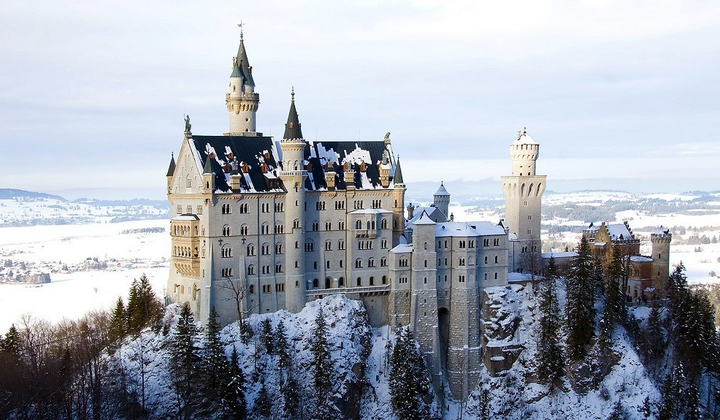
Neuschwanstein Castle is perhaps the most famous castle in Germany, which became a prototype for the Disney Sleeping Beauty Castle. Located in the picturesque Alps, it looks like it came straight from the pages of a fairy tale. Built in the 19th century at the behest of King Ludwig II of Bavaria, the castle combines romanticism, mysticism, and theatricality.

Tourists are impressed not only by the exterior but also by the interiors of the castle: halls decorated to resemble scenes from Wagner's operas, a luxurious Throne Room, exquisite frescoes, and panoramic windows with views of mountain landscapes. The road to the castle winds through forests and mountains, making the journey here even more exhilarating. Neuschwanstein is a place where reality meets fantasy, and every visitor feels part of the story.
Romantic Road - picturesque medieval towns
The Romantic Road is one of the most famous tourist routes in Germany, stretching from Würzburg to Füssen and passing through more than 20 picturesque towns. It got its name for a reason: along the road stand ancient castles, stone bridges, wooden houses, and narrow streets that exude romance.

One of the most famous towns on the route is Rothenburg ob der Tauber. Its medieval center has been preserved in almost pristine condition, with walls, towers, and traditional half-timbered houses. In the evening, lanterns are lit, and the town takes on a magical appearance. Other towns, such as Dinkelsbühl, Nördlingen, or Augsburg, are also worth visiting for their architecture, atmosphere, and local culinary treasures. The Romantic Road is a journey through time, allowing one to step back into the era of knights and kings for a few days without losing modern tourist comforts.
Heidelberg - ancient university and castle
Heidelberg is one of the most romantic cities in Germany, attracting tourists not only with its atmosphere but also with deep historical roots. The city is located on the Neckar River, among green hills, and is primarily known for its oldest university in the country, founded in 1386. Heidelberg University is not only an educational center but also a historical symbol of intellectual development in Europe. The medieval buildings have retained their authenticity and attract tourists to courtyards adorned with stone architecture and old frescoes.

Equally well-known is Heidelberg Castle, which towers over the city. Its ruins have become a symbol of German romanticism. Built in the Gothic-Renaissance style, the castle has undergone numerous destructions but remains a grand structure. One of its main attractions is the largest wine barrel in the world, with a capacity of over 200,000 liters. The view of the city from the castle terrace is a separate impression that will be remembered for a long time. Visitors can reach it either by walking along a narrow path through the forest or by taking a funicular.
Dresden - 'Florence on the Elbe'
Dresden is often referred to as 'Florence on the Elbe' due to its rich artistic and architectural heritage. Located in eastern Germany, the city has become an epitome of German culture and art. After nearly complete destruction during World War II, many historical monuments were carefully restored.
The most outstanding of them is Zwinger - a baroque palace that now houses museums, including the famous Old Masters Gallery with works by Raphael, Rembrandt, and Titian. The Semper Opera and the Frauenkirche, a symbol of Dresden restored from ruins, also attract attention.

Dresden lures not only with culture but also with atmosphere: evening walks along the Elbe, markets with local dishes, intimate exhibitions, contemporary art. It is the ideal place for those who appreciate the harmonious blend of history and modernity.
Black Forest - nature and traditions
The Black Forest (Schwarzwald) is one of the most picturesque and atmospheric places in Germany, enticing not only with nature but also with deep folk traditions. Located in the southwestern part of the country, this region is a true treasure for outdoor enthusiasts. Trails through coniferous forests, alpine lakes, waterfalls, and alpine meadows attract tourists year-round.
It is also the birthplace of world-famous cuckoo clocks and traditional embroidered clothing - especially characteristic of the region. In small villages, you can meet local craftsmen who still hand-make wooden clocks, weave baskets, or sell homemade treats. In the Black Forest, it is worth trying national dishes, such as the famous 'Black Forest cake' (Schwarzwälder Kirschtorte).

The cities of Freiburg, Baden-Baden, and Triberg are the gateways to the Black Forest. Here, cozy meets elegance. And trips along trails that pass through dense forest expanses create an impression of a real fairy tale.
Ruhr Area - industrial tourism
The Ruhr Area is an example of a successful transformation from an industrial region to a cultural and tourist center. Once the powerful coal and steel heart of Germany, today the Ruhr is a model of sustainable development. Old factories and mines have been transformed into museums, art spaces, and theaters.
The most well-known example is Zollverein in Essen - a former coal complex that is now a UNESCO World Heritage site. Today, designer centers, art installations, and exhibition pavilions are located here. The territory around has been converted into parks, skate zones, and even industrial-style swimming pools.

The cities of Duisburg, Dortmund, and Bochum have become centers of cultural tourism: here industrial art festivals are held, tours of former factories are organized, and labor history museums operate. For tourists interested in atypical routes, the Ruhr is a real gem on the map of modern Germany.
Tourist tips: transport, seasonality, hotels
Traveling in Germany is convenient and pleasant. The main advantage is the perfect transport infrastructure. The Deutsche Bahn railway network connects major cities and small towns, while regional trains provide quick access to the countryside. Additionally, there are numerous FlixBus routes that allow for inexpensive travel to the most remote corners of the country.
If you are planning a multi-day trip, consider purchasing regional tickets (Länder-Ticket) that allow a few people to travel within one region for a day at a favorable price. In major cities, it is convenient to use public transport: subways, trams, buses.
The best season for a trip is from May to September. Spring and autumn offer mild weather and fewer tourists, while summer has the most cultural activities and festivals. Winter is the season for lovers of Christmas markets and skiing in the Alps.
When it comes to accommodation, it is easy to find any type of lodging in Germany - from budget hostels to luxury hotels. Small guesthouses in rural areas and eco-farms, where one can feel true German hospitality, are particularly popular. For longer trips, it is advisable to book apartments via services like Booking or Airbnb.

Read also