Over 33,000 Pieces of Space Debris Now Crowding Earth's Orbit

The Rising Threat of Orbital Debris
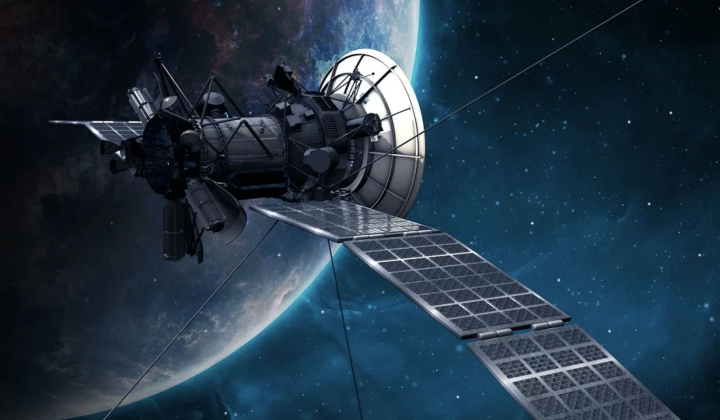
According to НВ — Техно: Space debris is accumulating rapidly in low Earth orbit, posing serious hazards to satellites and space stations. According to data from Space-Track and the U.S. Space Surveillance Network, more than 33,000 tracked objects are currently circling the planet. Of these, 12,550 are classified as fragments, while 17,682 are functional payloads-primarily satellites. In total, over 15,800 tons of material have accumulated in orbit, raising alarm among experts.
The situation is made worse by the fact that for every ten satellites, there are roughly seven tracked debris pieces. The largest contributors to space junk are China, the CIS countries, and the United States. China's share stems largely from its 2007 anti-satellite weapon test, while U.S. figures include remnants from the 2009 collision between the Iridium 33 satellite and the Kosmos 2251 spacecraft.
“Even without new launches, conditions could worsen. Collisions and breakups generate new debris faster than existing junk can naturally burn up in the atmosphere.”
Emily Sacchi, aerospace engineer with the Bath University Rocketry Team
Emerging Technologies to Tackle Space Junk
To address the growing debris problem, researchers are developing a range of technologies, including:
- magnetic capture systems
- electrodynamic tethers
- harpoons
- special braking sails
- laser-based debris removal
- controlled deorbit systems
In addition, materials designed to burn up completely in the atmosphere and end-of-life disposal mechanisms are being explored. Surabhi Sathish, a propulsion engineer, noted that 'robotic manipulators could serve purposes beyond just cleanup. These technologies are also suitable for inspecting, servicing, refueling satellites, and extending their operational lifespan.'
One planned mission is the European Space Agency's ClearSpace-1, scheduled for 2029. However, commercial active debris removal systems have yet to be demonstrated in practice, according to Hrishi Dave, head of propulsion at the Bath University Rocketry Team.
As a result, the rising volume of orbital debris is causing significant concern in the scientific community and calls for urgent measures to ensure the safety of space missions.
The growth of space junk not only threatens existing satellite operations but also complicates the planning of new space missions. Upcoming cleanup efforts like ClearSpace-1 could become a critical step in addressing this challenge. Experts warn that without active orbital cleanup, the situation could reach a critical point, demanding major changes in how future spacecraft are designed and launched.
As the issue of space debris intensifies, it's crucial to explore how advancements in space exploration, such as NASA's ambitious plans for a lunar base, could influence debris management strategies. Establishing a permanent presence on the Moon may not only enhance our understanding of space but also provide new opportunities for sustainable practices in orbit, ultimately contributing to the reduction of space junk.

Read also