10th-Century Viking Port Traces Uncovered by Polish Archaeologists

Archaeological Initiative in Wolin
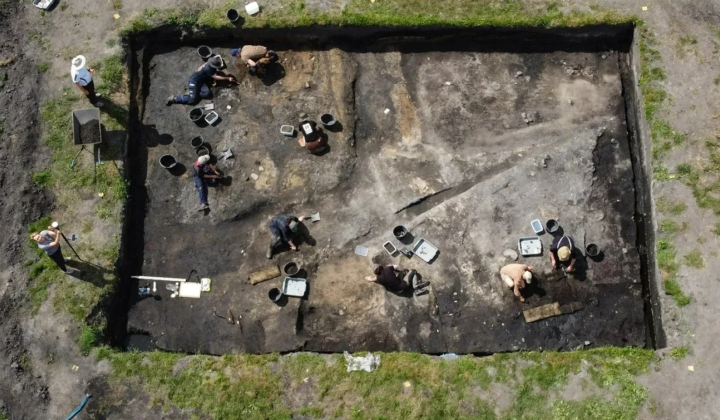
According to НВ — Техно: A research project led by scientists from the Institute of Archaeology and Ethnology of the Polish Academy of Sciences (IAE PAN) and Aarhus University is exploring the northern sector of early medieval Wolin, a town in northwestern Poland. The initiative aims to pinpoint the location of a historical harbor and assess the Scandinavian influence on the region's development. Excavations have already reached 10th-century archaeological layers, with researchers anticipating the discovery of strata dating back to the 8th and 9th centuries.
During last year's fieldwork, four wooden huts separated by drainage ditches-likely from the 11th century-were uncovered. Artifacts from the first excavation season include:
- amber beads
- metal ornaments
- pottery
- clay spindle whorls
- whetstones from Norway
These finds point to thriving trade networks and cultural exchanges in the area.
Dr. Wojciech Filipowiak of IAE PAN stated: 'We hope to uncover remnants of the harbor, which was the most vital component of towns in that era.'
He also emphasized that 'the most intriguing layers are still beneath us. They date back to Wolin's founding period, and archaeologists continue to debate the extent of Scandinavian and Viking contributions to its establishment.'
Fresh Discoveries and Their Implications
This year's excavations have yielded remarkable new findings. In 2024, a Viking-era sword dating from the late 9th to early 10th century was recovered from the Supraśl River in northeastern Poland. Filipowiak noted that 'this site offers exceptional preservation conditions, as the waterlogged, oxygen-poor soil has protected organic materials that typically decompose over time.'
It is worth noting that early medieval towns in this part of Europe were predominantly built from wood. As Filipowiak explained, 'as a result, cottages, streets, and remains of various structures have been preserved exceptionally well.' The layout of the discovered huts resembles buildings found in Scandinavian craft and trade settlements established by Vikings around the Baltic Sea. 'This may indicate that Silver Hill held particular significance for Scandinavian communities,' the researcher added.
The archaeological project in Wolin is thus opening new avenues for understanding Scandinavian influences in medieval Poland and the region's role within the broader context of European history.
Studies conducted in Wolin underscore the importance of Scandinavian trade routes and cultural interactions that occurred in what is now Poland during the early Middle Ages. The uncovered artifacts and architectural remains point to dynamic regional development and close ties between different cultures. Moving forward, these discoveries could reshape perceptions of Wolin's place in European history and the Viking impact on local community formation.

Read also