Fish Produce a Unique Mineral That Helps Capture Carbon

How Bacteria and Fish Work Together
According to НВ — Техно: June 6, 9:30 PM
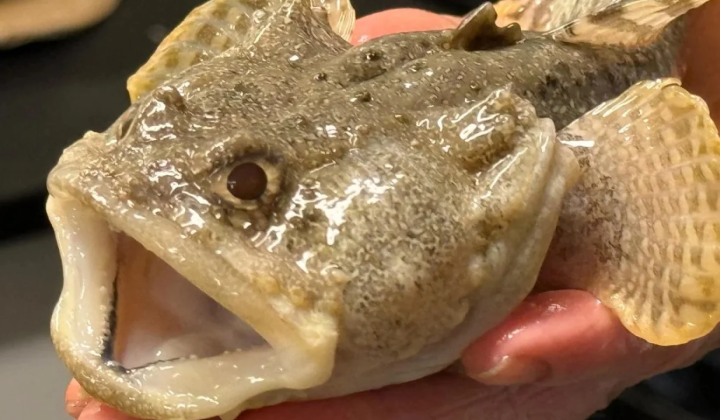
A study led by Anthony Bonacolta, a former graduate student at the University of Miami’s Rosenstiel School of Marine, Atmospheric, and Earth Science, has revealed that bacteria living in the intestines of fish collaborate with their host to produce calcium carbonate, a compound known as ichthyocarbonates. These substances act as carbon sinks. The experiment focused on toadfish from the Gulf of Mexico and found that ichthyocarbonate production does not occur in fresh or low-salinity water.
How the Research Was Conducted
During the study, toadfish were divided into three groups and placed in water with varying salt levels:
- 9 parts per thousand (estuarine solution)
- 35 parts per thousand (standard seawater)
- 60 parts per thousand (hypersaline water)
In normal seawater (35 parts per thousand), the production of calcium carbonate is triggered, and in hypersaline water (60 parts per thousand), it reaches peak levels. In fresh or low-salinity water, no ichthyocarbonates are released, indicating that this process depends on salinity.
The researchers also conducted a genetic analysis, which identified the bacterium Photobacterium damselae subsp. damselae in the fish guts and mineral sediment. These bacteria carry genes specifically adapted to crystallize calcium. As scientist Martin Grosell explained:
“What we thought for centuries was purely fish physiology has actually turned out to be a close and very subtle symbiosis between a living creature and its internal bacterial community.”
In summary, the study highlights that the interaction between fish and their gut bacteria may be crucial for understanding carbon cycling processes in marine ecosystems.
This discovery underscores the importance of symbiotic relationships between organisms and microbes, which could influence ecological and biochemical processes in the oceans. Understanding the role of bacteria in producing ichthyocarbonates may be key to improving carbon cycle models, especially in the context of climate change and rising ocean acidity.

Read also