Harvard Study Reveals AI Outperforms Doctors in Emergency Diagnosis

Artificial Intelligence in Medicine: A New Benchmark
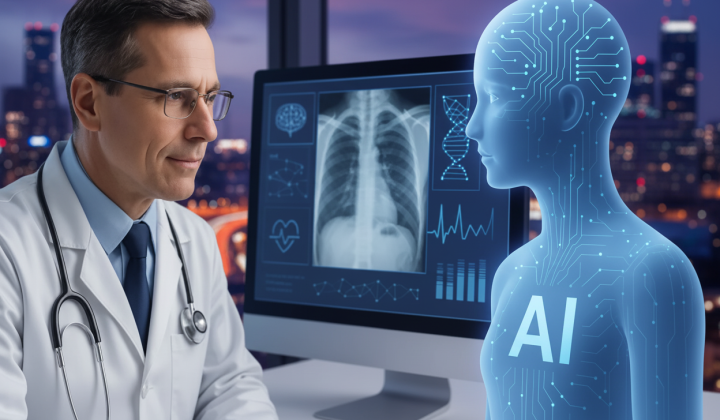
According to Главком: A study conducted by Harvard Medical School has demonstrated that artificial intelligence (AI) surpasses physicians in diagnosing conditions and formulating treatment plans within emergency departments. The research analyzed 76 patient cases, with AI correctly or nearly correctly identifying the diagnosis in 67% of instances. In comparison, doctors achieved accurate diagnoses in only 50–55% of cases. Notably, when provided with additional data, the AI's accuracy climbed to 82%.
During a test involving five clinical scenarios, AI delivered correct treatment plans 89% of the time, while doctors achieved just 34% accuracy. It is important to highlight that the AI operated solely on textual information and did not account for patients' physical examinations. This underscores both the technology's promise and its inherent limitations.
Opportunities and Risks of Integrating AI
The study's authors believe that while AI will transform medicine, it will not completely replace human doctors. As Arjun Manrai stated:
'I don't think this means replacing doctors. But it does point to a deep technological shift that will change medicine.' - Arjun Manrai
This reinforces the idea that doctors, patients, and AI systems can work together as a cohesive team.
The research also mentioned Microsoft's AI Diagnostic Orchestrator (MAI-DxO), developed by Microsoft under the leadership of Mustafa Suleyman, co-founder of DeepMind. This system demonstrates a fourfold advantage in tackling complex cases. However, like any technology, it carries risks, including:
- potential errors;
- lack of clear accountability;
- the danger that doctors may become overly reliant on AI-generated answers.
Patients emphasize that final treatment decisions should remain in human hands.
The findings of this study highlight the growing role of artificial intelligence in medicine, particularly in enabling rapid and accurate diagnostics. Alongside significant benefits-such as improved accuracy in diagnoses and treatment plans-it is crucial to consider the potential risks and challenges of integrating new technologies into clinical practice. Successful adoption of AI in healthcare will require careful monitoring, training for medical professionals, and ensuring clear accountability for decisions made.

Read also