A South Korean satellite delayed by the war in Ukraine has finally launched aboard a SpaceX rocket.

SpaceX Satellite Launch
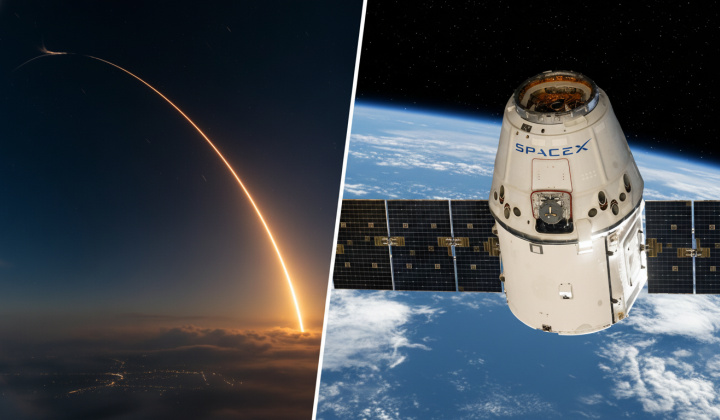
According to ХВИЛЯ: A Falcon 9 rocket lifted off at 3:00 AM Eastern Time (10:00 AM Kyiv time) from California's Vandenberg Space Force Base, carrying 45 satellites into orbit. The primary payload was South Korea's CAS500-2 Earth observation satellite, whose deployment had been postponed due to the conflict in Ukraine.
Developed by the Korea Aerospace Research Institute, the CAS500-2 was originally scheduled to launch on a Russian Soyuz rocket in 2022. Those plans were scrapped following Russia's invasion of Ukraine in February of that year. This satellite is the third in the Compact Advanced Satellite 500 series. The first, CAS500-1, reached orbit aboard a Russian Soyuz in March 2021, while CAS500-3 is slated for launch on South Korea's Nuri rocket in November 2025.
Mission Details
CAS500-2 separated from the second stage approximately one hour after liftoff. The remaining payloads were deployed over the next 90 minutes. In total, Falcon 9 released 44 additional satellites for operators including:
- Argotec
- Exolaunch
- Impulso.Space
- Loft-EarthDaily
- Lynk Global
- True Anomaly
- Planet Labs
The Falcon 9's first stage returned to Vandenberg just 7.5 minutes after launch, marking the 33rd flight and 33rd landing for booster B1071.
This mission was SpaceX's 54th launch since the start of 2026. With one exception-a Falcon Heavy flight-every one of the company's missions this year has been performed by a Falcon 9 rocket.
The CAS500-2 launch underscores the importance of international cooperation in space technology and highlights how geopolitical factors can shape space programs.
The delay caused by military conflict shows how external events can disrupt scientific research. By maintaining an aggressive launch cadence, SpaceX continues to expand access to space for nations and companies worldwide, with lasting implications for the global space infrastructure.
The successful launch of South Korea's CAS500-2 highlights the ongoing advancements in space technology, particularly in the context of recent geopolitical tensions. Similarly, the recent deployment of the ViaSat-3 satellite by SpaceX demonstrates the critical role that innovative satellite systems play in enhancing global connectivity, especially in Asia. As nations navigate the complexities of international relations, the importance of such technological developments becomes increasingly evident.

Read also