Dark Matter Traces Detected at Milky Way’s Core by Artificial Intelligence

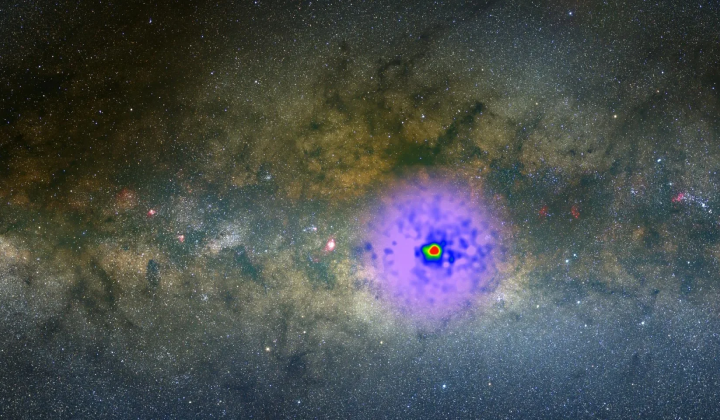
Gamma-Ray Emissions in the Galactic Center Under New Scrutiny
According to НВ — Техно: A fresh wave of research into mysterious gamma-ray emissions at the heart of the Milky Way has emerged, powered by a machine learning analysis. This novel approach suggests the signal’s sources are extremely faint, challenging the theory of millisecond pulsars and lending weight to the hypothesis of dark matter self-annihilation.
Florian List from the University of Vienna led the study, developing a machine learning system alongside his research team. The AI was trained on over a million simulated observations, yielding new findings. As Nick Rodd from Lawrence Berkeley National Laboratory noted, the analysis indicates that
“these sources must be exceptionally faint. They are nearly indistinguishable from the radiation theoretically expected from dark matter annihilation.”
Possible Explanations and New Frontiers
The study also explores the possibility that the glow could stem from millisecond neutron stars. If true, at least 35,000 such objects would need to exist in the galactic center. Earlier estimates, however, placed the count at only a few hundred or thousand. Florian List emphasized that
“interpreting the signal is extremely challenging because the Milky Way’s center is an exceptionally bright and densely populated region.”
Notably, previous statistical analyses did not account for the energy of each individual gamma-ray photon.
These fresh insights open new doors for further investigation into the enigmas surrounding gamma-ray emissions within our Galaxy. The research continues to captivate scientists and astronomers striving to unravel the mysteries hidden at the Milky Way’s core.
This progress in gamma-ray studies could significantly reshape our understanding of dark matter and its properties. The application of machine learning in astronomy unlocks new capabilities for analyzing vast datasets, enabling more precise identification of gamma-ray sources and their nature. The results of this study may lay the groundwork for future experiments and theoretical models exploring dark matter and its role in shaping our Galaxy.
As scientists delve deeper into the complexities of gamma-ray emissions, understanding the implications of stellar phenomena on our quest for extraterrestrial life becomes ever more crucial. Recent findings regarding stellar winds and coronal mass ejections highlight the challenges these natural events present, potentially impacting the habitability of distant worlds. This connection underscores the intricate relationship between cosmic events and the search for alien life.

Read also