Gold Jewelry and a Copper Mirror Discovered in a Hidden Cache in Egypt

Major Find at the Panhesy Cemetery
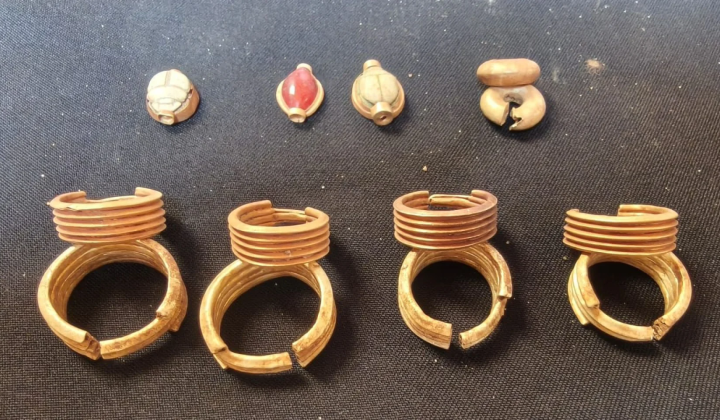
According to НВ — Техно: On June 9 at 12:02 PM, an Egyptian archaeological mission announced a significant discovery at the Panhesy cemetery in the Ain Shams district, located in northeastern Cairo. A mudbrick burial structure was uncovered, containing human remains and a hidden cache of various objects that shed light on ancient rituals and daily life. The finds include:
- a copper mirror;
- five pairs of gold earrings;
- three containers for eye liner;
- two blue faience jars, one of which held six scarabs, two of which were set in gold.
This area once served as the necropolis of Heliopolis, one of Egypt's oldest cities, and was in use during the Late Period (664–332 BC). During the excavations, archaeologists also uncovered additional burial structures made of mudbrick and limestone, as well as two fragmented coffins-one ceramic and the other plaster. One of the coffins contained the gilded remains of a man whom researchers believe to have been a military figure.
The dig also revealed two alabaster cosmetic vessels, complete with their lids and still intact. Inside these alabaster containers, traces of eye makeup were found. A third vessel was made of black obsidian. Additionally, archaeologists discovered four semi-precious stones, two of which are likely agate: one reddish-pink, set in a yellow metal mount believed to be gold, and another greenish stone.
Symbolic Objects
The cache uncovered during the excavation contained amulets in various symbolic shapes, including a duck and the crown of the god Atum, as noted by Mohamed Abdel Badi. This find opens up new avenues for studying ancient Egyptian burial practices and culture.
Overall, the discovery at the Panhesy cemetery underscores the importance of this region for archaeological research and its significance in Egypt's history.
This find represents a major contribution to understanding ancient Egyptian culture and burial rituals. Not only does it confirm existing knowledge about this era, but it also opens up new possibilities for further study. The Ain Shams area, as the former necropolis of Heliopolis, continues to attract archaeologists due to its historical value and the numerous artifacts that can illuminate the daily life and beliefs of the ancient Egyptians.
This remarkable discovery at the Panhesy cemetery is not the only recent find shedding light on ancient Egyptian practices. In a related excavation, archaeologists uncovered a unique burial site featuring both humans and wild boars, revealing intriguing details about ritualistic customs. To learn more about this fascinating find, visit this article.

Read also