Hidden Battery Flaws in EVs Can Now Be Detected Thanks to a New European Technology

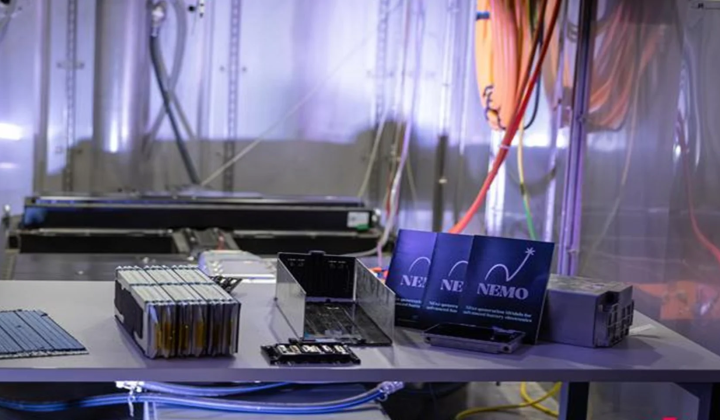
Innovative Battery Monitoring System Unveiled
According to НВ — Техно: On June 20 at 6:00 PM, a cutting-edge battery monitoring technology was introduced as part of the European Nemo project. This development makes it possible to identify concealed damage and degradation in individual cells at an early stage by employing electrochemical impedance spectroscopy (EIS). Researchers from Graz University of Technology (TU Graz), the Free University of Brussels (VUB), and several industrial partners collaborated on this innovation, which already has a working prototype at the single battery module level.
Advantages of the New Approach
Conventional battery management systems (BMS) typically track voltage, current, and temperature. The new method, presented within the project, allows a look beneath the surface of battery cells to detect threats before they escalate. The primary goal of the project is to train electronics to spot these dangers early. To achieve this, engineers deliberately damaged batteries in the lab, subjecting some cells to mechanical deformation to simulate impacts from parking incidents or collisions.
Electrochemical impedance spectroscopy (EIS) measures the internal electrical resistance of battery cells. The TU Graz team developed a physics-based mathematical model that predicts volume changes in battery cells during charge and discharge cycles. Colleagues at VUB created models that track the wear dynamics and lifespan changes of each individual power cell. Current diagnostic methods mostly capture only overall capacity loss, whereas these new models reveal internal changes within cells as they age.
Christoph Driessen from the Institute of Vehicle Safety at TU Graz noted that the battery management system is a critical tool for the safe and environmentally friendly operation of electric vehicles.
He emphasized that if faults in individual cells can be detected early using BMS, many serious accidents and breakdowns could be avoided. Previously, testing only recorded dry figures, such as the percentage drop in capacity, but now the new models offer much more detailed insights.
The upgraded battery management system will not require an increase in the size or weight of the onboard electronics. The next phase of the project involves adapting this technology for mass industrial production, which could significantly enhance the safety and efficiency of electric vehicles in the future.
This new technology represents a major step forward in ensuring electric vehicle safety, as it enables early detection of battery issues that could prevent serious accidents. Successful implementation of the project could have a substantial impact on the automotive industry, given that the growing popularity of electric vehicles demands new solutions for their safe operation. Adapting these developed technologies for series production could be a crucial milestone in boosting consumer confidence in electric cars.
As advancements in battery technology continue, researchers are also exploring new ways to enhance battery longevity and safety. For instance, a recent study highlights a revolutionary battery that reportedly lasts eight times longer than conventional models. This innovation could significantly impact the electric vehicle market, offering not only improved performance but also greater reliability. To learn more about this breakthrough, read about the new safer battery technology.

Read also