Ukrainian Drones Have Disabled Eight of Russia’s Ten Largest Oil Refineries

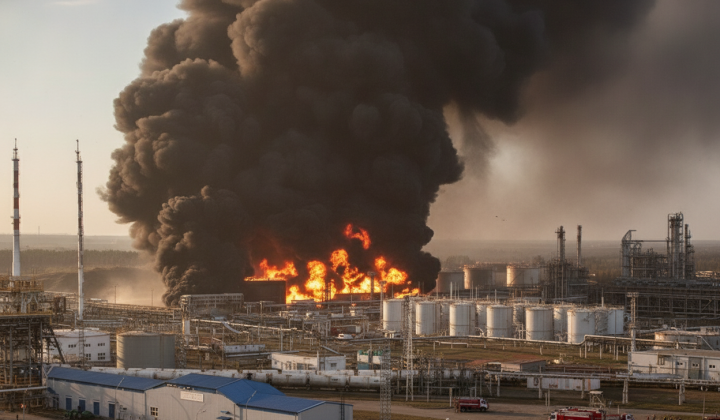
Ukrainian Drone Strikes on Russian Oil Refineries
According to Главком: In May alone, Ukrainian attack drones successfully struck Russian oil processing plants 16 times, hitting eight of the ten largest facilities. These strikes dealt a severe blow to Russia’s refining sector: during the first week of June, the country’s refining throughput fell below 4 million barrels per day-the lowest level in 21 years. Damage has forced nearly a third of Russia’s total refinery capacity, or 2.14 million barrels per day, to remain idle.
Fuel production has slumped to levels not seen since the early 2000s, sparking serious alarm on the Russian market. On the eve of the harvest season, Russia now faces a shortage of both gasoline and diesel. Western economic sanctions are complicating repairs to damaged equipment, further worsening the crisis.
Economic Fallout from the Strikes
On the morning of June 16, 2026, Ukrainian drones targeted Moscow’s largest oil refinery in the Kapotnya district, triggering a massive fire at the facility. Ukrainian President Volodymyr Zelenskyy confirmed the successful strike on the Moscow Oil Refinery, stating that attacks on military and strategic assets inside Russia are a direct response to Russian strikes on Ukraine and the prolongation of the war.
Ukraine’s campaign against Russia’s energy sector-especially its refineries-has caused extensive damage. Analysts at The Moscow Times warn that this summer, Russia appears to be heading toward what could become the worst fuel crisis in its history. It is already clear that the situation in Russia’s fuel market is deteriorating, with potentially severe consequences for the national economy.
These developments underscore the rising tension in Russia’s energy sector and could significantly undermine its economic stability. The drop in refining output and potential fuel supply disruptions may trigger social and economic fallout, especially as sanctions hinder infrastructure repairs. Consequently, continued strikes on energy facilities could become a key element of Ukraine’s wartime strategy, highlighting its ability to cripple the adversary’s strategic resources.
The ongoing strikes on Russian oil facilities have had a profound impact, leading to a notable admission from Moscow regarding a decrease in oil production for the first time since early 2026. This decline highlights the escalating challenges faced by the Russian energy sector, which is grappling with both external pressures and internal crises. For a deeper understanding of how these developments are affecting Russia's oil output, read more in our detailed analysis on the recent production decline.

Read also