How a U.S.-Iran War Could Reshape the Nuclear Ambitions of China and North Korea

How Global Conflicts Influence Nuclear Ambitions
According to ХВИЛЯ: Escalating tensions between the United States, Israel, and Iran could significantly impact the nuclear strategies of China and North Korea. Analysts are examining how these events may accelerate the expansion of nuclear arsenals in both nations. The conflict has already sent shockwaves through the Middle East and global financial markets, highlighting its far-reaching consequences.
For decades, a cornerstone of American foreign policy has been to prevent Iran from obtaining a nuclear bomb. However, as Dr. Zhao Tong, a nuclear policy expert with the Carnegie Endowment, observes,
"I think this will reinforce Chinese leaders' belief in the broad coercive value of nuclear weapons."
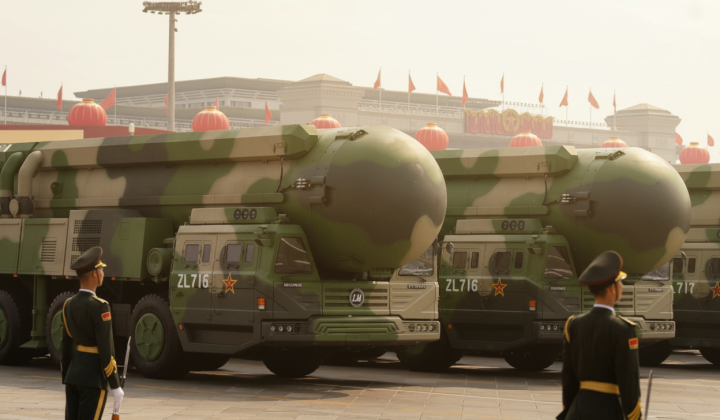
He further notes that China's recent nuclear buildup stems from President Xi Jinping's conviction that a larger arsenal would compel the United States to show greater respect for China's core interests.
The expert also emphasizes that
"Now that Beijing sees Washington trying to topple regimes in more than one country again, it may have greater regime security concerns."
This perception could drive China to further expand its nuclear capabilities.
North Korea's Advancing Nuclear Program
Under Kim Jong Un's leadership, North Korea continues to aggressively advance its nuclear weapons program. Dasl Yoon, a reporter for The Wall Street Journal, points out that Kim Jong Un
- "has consistently expanded his weapons program since coming to power,"
- and recently stated that any negotiations with the U.S. would depend on its recognition of North Korea as a nuclear state.
Current estimates suggest North Korea possesses approximately 50 nuclear warheads, with enough fissile material to produce around 40 more. This marks significant progress from just five years ago, when its arsenal was estimated at 30-40 units.
It is also crucial to note that North Korea has long pointed to its nuclear program as a necessary defense against perceived U.S. hostility, even before recent strikes on Iran. This suggests Kim Jong Un and his regime are likely studying the lessons from the Iran conflict, including U.S. military capabilities, the rate at which its precision munitions are depleted, and who might come to Iran's defense.
The potential for increased nuclear arsenals in China and North Korea, set against the backdrop of Middle Eastern conflict, underscores a dangerous escalation in global threats and could heighten international tensions. These developments may strain diplomatic relations among major powers, particularly between the U.S., China, and their allies, demanding new approaches to global security and arms control. The situation presents a complex challenge for non-proliferation efforts worldwide.
The evolving dynamics of international relations are further complicated by allegations of covert nuclear activities by China, which could exacerbate the already tense atmosphere surrounding nuclear proliferation. As nations like Iran and North Korea reassess their nuclear strategies, understanding these developments is crucial for grasping the broader implications for global security.

Read also