Japanese Researchers Unveil a Bicycle That Anticipates the Rider's Intentions

An Innovative Control System for Two-Wheeled Vehicles
According to НВ — Техно: A team at Shibaura Institute of Technology (SIT) in Japan has engineered a novel control system for bicycles and motorcycles. This technology can tell the difference between intentional turns and loss of balance, offering stabilization support only when truly needed-boosting rider safety. The project was led by Associate Professor Hiroaki Kuwahara from SIT’s Department of Machinery and Control Systems.
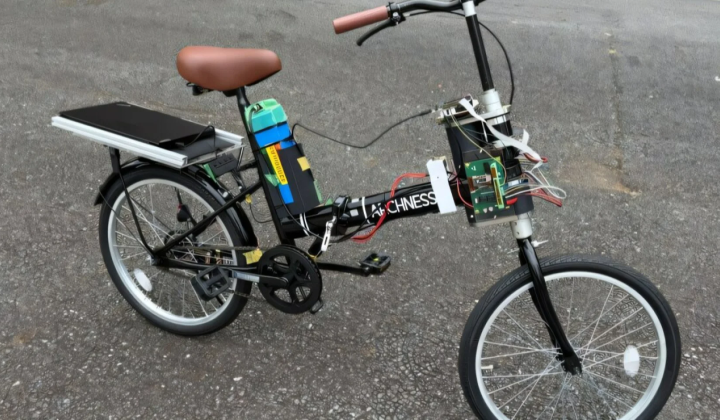
The researchers built a steer-by-wire bicycle that combines a control platform with a machine-learning-based system for classifying the rider’s intent. At the heart of this system is a long short-term memory (LSTM) neural network. Using K-means clustering, the team sorted riding data into three categories:
- going straight,
- turning,
- instability.
The LSTM model analyzed key variables including steering angle, vehicle speed, lean angle, lateral acceleration, and reaction torque.
This setup provides stabilization assistance only when necessary, which can improve safety while preserving a natural riding feel. As Hiroaki Kuwahara explains:
'By analyzing the interaction between rider and vehicle, we aimed to create a mobility system that offers support only when it is truly needed.' Hiroaki Kuwahara
Unlike a conventional bicycle, where the handlebars are mechanically linked to the front wheel, the steer-by-wire system connects them electronically. This design allows the system to monitor steering behavior and the rider-vehicle interaction while still delivering a realistic riding experience. The researchers believe this technology could eventually be applied to e-bikes, electric motorcycles, bike-sharing services, and delivery vehicles.
Shifting Market Conditions Impact the Industry
In a related development, Porsche recently announced it would shut down its subsidiary Porsche eBike Performance GmbH. Founded in August 2022 to manufacture e-bikes, the company will close its facilities in Ottobrunn, Germany, and Zagreb, Croatia, after nearly four years of operation, leaving about 350 employees without jobs. In a press release, the brand stated that changing market conditions led to the decision to exit the e-bike division.
The development of this new control system for two-wheeled vehicles could mark a major step forward in road safety, especially as electric bicycles and motorcycles grow in popularity. While some companies like Porsche are scaling back production in response to shifting market dynamics, others continue to invest in cutting-edge technologies that could reshape how we think about vehicle safety and control. This highlights an industry in flux, where safety and innovation are becoming top priorities for manufacturers.
As the automotive industry continues to evolve with advanced technologies, the detection of hidden issues in electric vehicles is becoming increasingly critical. Recent innovations in battery diagnostics are paving the way for safer and more reliable electric mobility solutions. To learn more about how new methods can identify concealed battery damage in EVs, check out this article on detecting battery issues in electric vehicles.

Read also