Six Fourth-Century Mosaic Floors Unearthed at Roman Site in Ksarate, Albania

Archaeological Discoveries in Ksarate
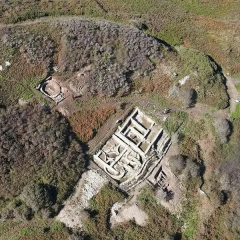
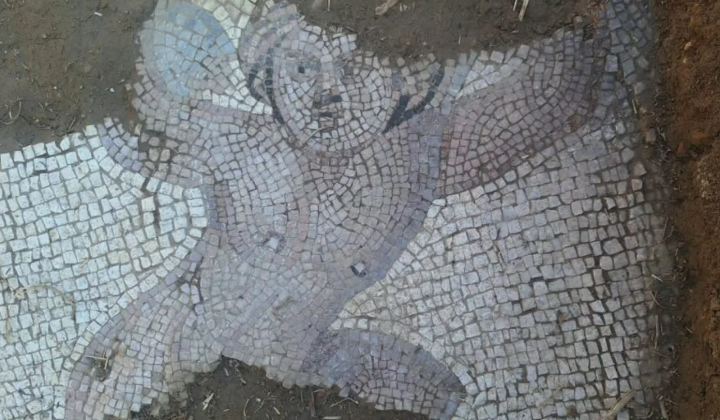
According to НВ — Техно: Excavations in the southern Albanian town of Ksarate have revealed six intricate mosaic floors dating back to the 4th century AD within a Roman architectural complex. This site forms part of a vast, multi-layered settlement spanning the Roman and Late Antique eras, situated along the middle valley of the Vjosa River. The ongoing research is a collaborative effort between Albanian and Italian archaeologists, covering approximately 70 hectares of the area.
Archaeologists have documented 67 topographic units and uncovered around 20 distinct archaeological sites. Among the significant findings are:
- a large structure featuring thermal baths;
- luxurious Roman residences adorned with colorful mosaics depicting geometric patterns and human figures;
- well-preserved wall paintings.
Perched within a natural amphitheater overlooking the winding Vjosa River, Ksarate’s location highlights its strategic and scenic importance during ancient times.
Ongoing Research and Historical Importance
Excavations continue as researchers work to better understand the complex’s purpose and significance. These discoveries underscore the region’s architectural sophistication and cultural vitality during the Roman period. In a related find during summer 2026, archaeologists from the University of Warsaw and the University of Tirana uncovered the remains of an Illyrian temple in northern Albania. The temple’s stone foundation measures 13.6 meters long by 9.6 meters wide, reflecting the proportions typical of classical Greek temples. This marks the first Illyrian cult site identified in northern Albania.
The Ksarate site is recognized as one of Europe’s rare examples of a lost city, with continuous archaeological work underway since 2018. The discovery of mosaics and other architectural elements is opening new avenues for exploring the region’s rich history and cultural heritage.
These findings in Ksarate highlight Albania’s role as a significant center of Roman and Illyrian culture, offering fresh insights into the historical transformations that shaped the region.
International collaborative projects like this play a crucial role in preserving and promoting cultural heritage, while enhancing our understanding of ancient civilizations that once thrived in what is now modern Albania.
As excavations in Ksarate continue to unveil the rich tapestry of ancient Roman life, the discovery of unique artifacts in neighboring regions further highlights the area's historical significance. For instance, a recent find of ancient Neolithic pottery in Northern Macedonia offers insights into the cultural exchanges that shaped the Balkans over millennia. Such discoveries not only enrich our understanding of historical developments but also underscore the interconnectedness of ancient civilizations across the region.

Read also