Plasma Heated to 8.4 Million Degrees in Breakthrough Fusion Experiment

Advances in Fusion Energy Research
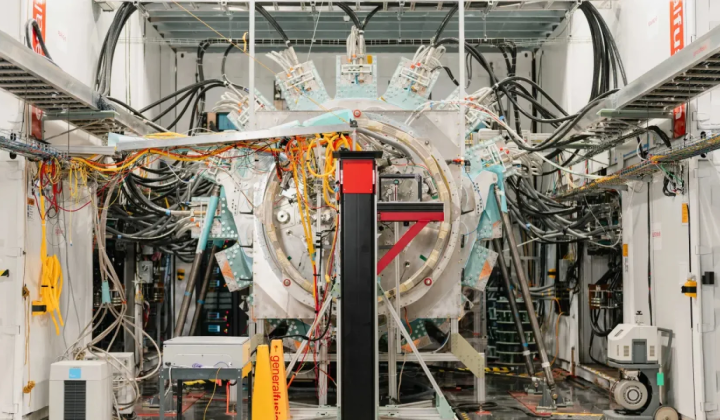
According to НВ — Техно: General Fusion's experimental device, the Lawson Machine 26 (LM26), has achieved a notable milestone in fusion research. During recent tests, the electron temperature inside the plasma reached 0.72 keV-equivalent to 8.4 million degrees Celsius. This result was made possible by the machine's mechanical compression system.
Built at roughly half the planned diameter of a full-scale commercial reactor, the LM26 has completed 11 experiments so far. Key results include:
- a threefold increase in temperature;
- a tenfold rise in plasma density;
- growth in the poloidal magnetic field.
These outcomes indicate meaningful progress toward the conditions required for sustained nuclear fusion.
General Fusion's Roadmap
Based in Vancouver, General Fusion expects to wrap up its current research program by mid-2028. The company aims to bring its first fusion power plant online around 2035. These findings were posted on the arXiv platform on June 26, 2026. Fusion technology holds the promise of abundant, carbon-free energy, and advances like this bring that vision closer to reality.
If successful, General Fusion's approach could help reshape the global energy landscape by reducing reliance on fossil fuels and lowering environmental impact. The company's progress represents a significant step toward harnessing the same nuclear reactions that power the sun.
As the field of nuclear energy evolves, advancements in fusion research are gaining momentum. In a related development, Deep Fission has secured contracts for significant nuclear reactor projects, further highlighting the industry's shift towards innovative energy solutions. This synergy between fusion and fission technologies could play a crucial role in meeting future energy demands sustainably.

Read also