An Artist Depicted a Bat Hunting Birds 400 Years Before Science Confirmed It

The Discovery of the Greater Noctule Bat
According to НВ — Техно: June 30, 11:00 PM
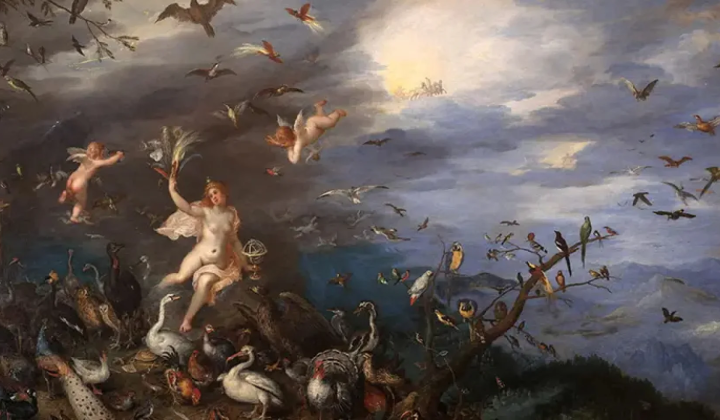
In 2001, scientists confirmed that the greater noctule bat, Europe’s largest bat species, preys on birds. This finding was made possible through fecal analysis, allowing researchers to assert that the greater noctule actively hunts small birds. Remarkably, the artist Jan Brueghel the Elder had already illustrated this behavior in his 1611 painting 'Air'-a full 400 years before the scientific community caught up.
The Painting 'Air' and Its Significance
'Air' is an allegorical canvas featuring the muse Urania and over 60 bird species. In the painting, a greater noctule bat is shown holding a small bird in its mouth, indicating that as early as the 17th century, artists had insights into this species’ dietary habits. It is worth noting that the greater noctule is not common in Belgium, Brueghel’s homeland, but is frequently found in Italy, where the artist lived and worked. The study confirming the bat’s bird-eating behavior was published in the journal Proceedings of the National Academy of Sciences. This discovery underscores how knowledge of nature, long reflected in art, continues to be validated by modern science.
The importance of this finding goes beyond confirming the greater noctule’s eating habits; it also highlights the interplay between science and art. Artists like Jan Brueghel the Elder possessed a detailed understanding of the natural world, likely through careful observation. Such discoveries open new avenues for exploring not only animal behavior but also the influence of culture on scientific inquiry.

Read also