Sperm Whales in the Mediterranean Are Now Speaking Different 'Dialects'

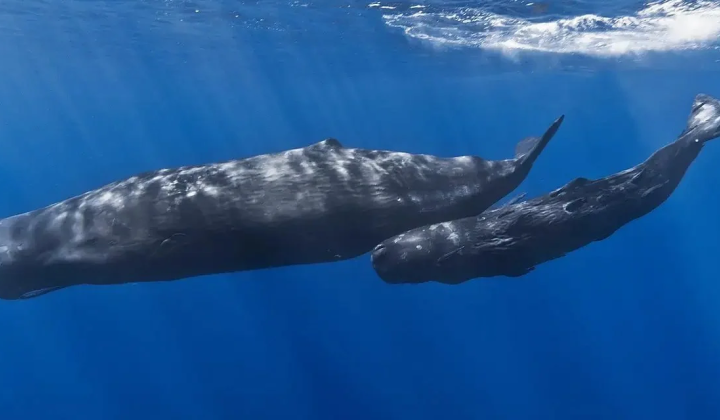
Study of Sperm Whale Vocalizations
According to НВ — Техно: June 24, 3:30 PM
A research effort led by bioacoustician Taylor Hersh from the University of Bristol and marine biologist Luke Rendell of the University of St Andrews has uncovered clear differences in the sounds produced by eastern and western Mediterranean sperm whales. According to the findings, whales on the eastern side emit faster sequences of clicks-known as codas-while their western counterparts generate slower acoustic patterns. This discovery sheds light on how these deep-sea mammals may have developed distinct communication styles over thousands of years.
The scientists analyzed 5,291 recordings of sperm whale codas collected across multiple years in the Mediterranean. Data was gathered near Spain's Balearic Islands between 2003 and 2021, as well as along the Hellenic Trench from 2005 to 2019. It is noted that Mediterranean sperm whales first entered the region roughly 20,000 years ago.
“What struck me most was how obvious these differences became once we started listening to the recordings,” said Taylor Hersh.
She added: “The western type is quite slow, whereas the eastern one is so rapid that it's hard to distinguish all four clicks.” These results could have important implications for understanding the social structure and communication of sperm whales in the Mediterranean Sea.
Significance of the Research
Studying sperm whale vocalizations can greatly advance our understanding of their behavior and evolution, particularly in how they adapt to different environments. The observed differences in sounds may also aid in conservation efforts, as knowledge of their communication can be used to monitor populations and assess the impact of human activities on their habitat.
This research underscores the value of bioacoustics in studying marine mammals and their ecology.

Read also