Mars Flyby Boosts NASA’s Psyche Spacecraft Toward a Distant Asteroid

NASA’s Psyche Mission
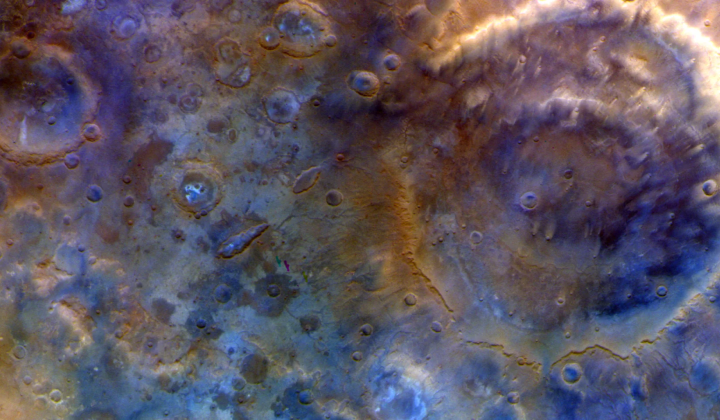
According to НВ — Техно: Launched in October 2023, NASA’s Psyche spacecraft performed a gravity-assist flyby of Mars on May 15, 2026. This maneuver brought the probe within 4,609 kilometers of the Red Planet’s surface, allowing it to capture images and test its scientific instruments. The mission’s primary target is the asteroid 16 Psyche, located in the outer main asteroid belt between the orbits of Mars and Jupiter. Arrival at the asteroid is expected in the summer of 2029. This mission aims to unlock secrets of planetary formation by studying a world that may be the exposed core of an ancient protoplanet.
Gravity Assist and Observations
During its close approach to Mars, the planet’s gravity acted like a cosmic slingshot, giving Psyche a significant speed boost. According to mission navigation chief Don Han,
“Mars added roughly 1,600 kilometers per hour to the spacecraft’s velocity and shifted its orbital plane by about one degree relative to the Sun.”
This maneuver has greatly accelerated the probe’s journey toward its destination.
Images taken during the flyby reveal dust streaks stretching about 50 kilometers across the Martian surface. Jim Bell, head of the mission’s camera team, noted that
“these observations not only produce stunning photos but also help verify the accuracy of the cameras and other instruments in space.”
Such tests are crucial for ensuring the mission’s future success.
Arrival at asteroid 16 Psyche is scheduled for August 2029, opening up new opportunities to study this mysterious object. The asteroid could provide vital clues about planet formation and the evolution of the solar system.
The Psyche mission represents a major step in space exploration, as asteroid 16 Psyche may be the remnant of a protoplanet’s core. This could help scientists understand how planets formed in the early solar system. Studying such objects has the potential to drive new discoveries in planetary science and geology.

Read also