First-Ever Signal from a Black Hole’s Event Horizon Detected by Scientists

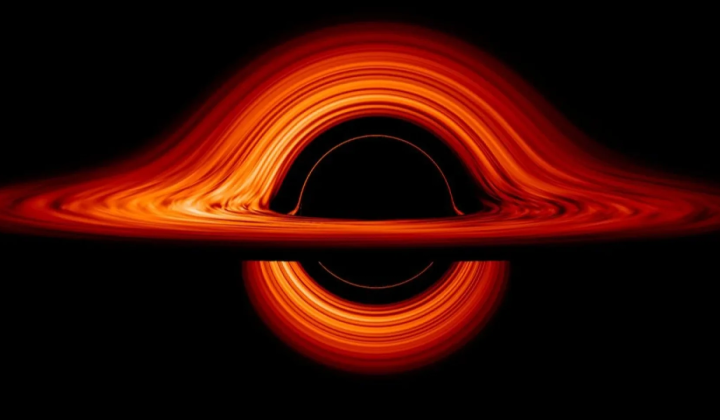
Groundbreaking Signal Traced to Black Hole Event Horizon
According to НВ — Техно: On June 25, 2026, researchers announced what could be the first detection of a signal originating from a black hole’s event horizon, captured through the gravitational wave event GW250114. The event horizon is the boundary surrounding a black hole beyond which nothing-not even light-can escape, making it impossible to observe directly. The team identified a signal that may represent a direct gravitational wave, emerging from the merger of black holes in the GW250114 event.
GW250114 stands as the clearest gravitational wave signal ever recorded to date. A direct wave occurs after black holes merge, when extreme gravitational forces drag spacetime into a rapid spin. On Earth, gravitational waves distort spacetime by less than the size of an atomic nucleus. Scientists have long theorized that a distinct category of gravitational wave, known as a direct wave, could carry information about the properties of the event horizon.
Key Characteristics of the Signal
According to theoretical physicist Sizheng Ma from the Perimeter Institute in Canada, gravitational waves allow researchers to investigate regions that remain invisible to light-based observations. Ma noted that the event was unusually powerful and clean, with the signal’s evolution matching predicted traits of a direct wave. As two black holes approach and merge, an initial signal arises from their final orbit around each other. After merger, the newly formed black hole rings like a bell, producing characteristic waves.
Previously, those oscillations were used solely to determine a black hole’s mass and spin rate. New theoretical work has revealed that within this signal, an additional component may be hidden-a direct wave linked not to the region around the event horizon, but to the horizon itself. According to theory, once the merger is complete, the black hole’s immense gravity twists spacetime into rapid rotation, while the signal quickly fades under gravitational influence. This produces a brief oscillation that forms the direct wave.
Detecting such a signal is extremely challenging. Initially, the researchers were cautious about the result due to the risk of false positives. However, further verification showed that the data behaved exactly as theory predicted. Despite this, the finding still requires confirmation using other gravitational wave signals, and theoretical models are planned for refinement and improvement.
If confirmed, this discovery would enable scientists to study the region near the event horizon more directly. It could help measure the horizon’s rotation speed and investigate how gravity affects the fading of information. Researchers believe this new method could enhance tests of general relativity and deepen our understanding of black hole physics. If validated, it would become the most precise study to date of the area immediately surrounding the event horizon.
This breakthrough could significantly impact modern astrophysics, as studying signals tied to the event horizon opens fresh avenues for understanding the nature of black holes. Improvements in gravitational wave observation techniques may lead to new discoveries in particle physics and gravitational theory, driving advances in astronomical technology. Continued research in this field could either confirm or challenge existing theories, reshaping our view of the universe.
This groundbreaking discovery aligns with recent advancements in black hole research, particularly a novel method for detecting binary black holes. Such innovative approaches are crucial for enhancing our understanding of these enigmatic cosmic entities and could provide further insights into the characteristics of their event horizons.

Read also