In Just 26 Hours, Euclid Telescope Captures 60 Million Stars at the Milky Way’s Center

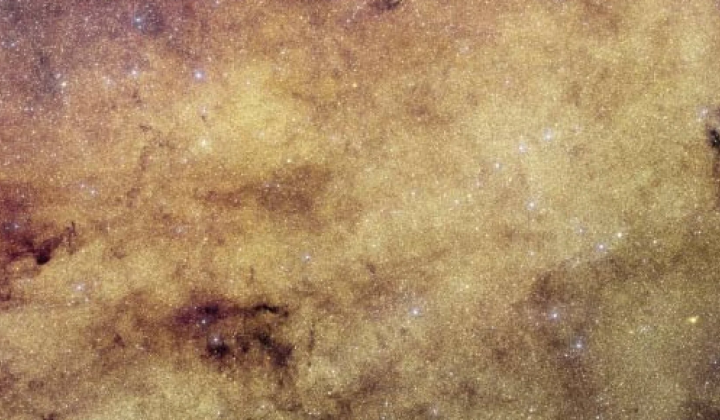
Euclid’s Deep Dive into the Heart of the Milky Way
According to НВ — Техно: Over a 26-hour period on March 23 and 24, 2025, the European Space Agency’s Euclid space telescope produced a groundbreaking image of the Milky Way’s galactic center, revealing more than 60 million stars. This composite view is built from nine separate frames, each one larger than the full Moon in the sky. The achievement marks a major milestone in space exploration, as the primary scientific goal of this observation is to hunt for exoplanets using the gravitational microlensing technique.
Technological Breakthroughs Behind the Euclid Mission
Euclid’s visible-light camera boasts exceptional sensitivity, enabling it to pick out individual stars within the densely packed galactic bulge without being overwhelmed by the surrounding brightness. According to the Euclid team, the resulting data will serve as a foundational map for NASA’s upcoming Roman Space Telescope mission.
Jason Rhodes, an astronomer at NASA’s Jet Propulsion Laboratory, noted: 'Combining Euclid’s image with Roman’s future survey will allow us to better chart our galaxy and more easily detect elusive cosmic objects-such as isolated black holes and rogue planets.'
To capture a comparable image from Earth, the Keck Observatory would have required roughly 2,000 hours of observation time-yet Euclid accomplished the task in just a single day. Each individual frame taken by the telescope covers an area 270 times larger than the field of view of the Hubble Space Telescope.
Rhodes emphasized that 'this has to be something of truly great scientific value.'
In short, Euclid’s portrait of the Milky Way’s center opens up fresh frontiers for astronomical research and deepens our understanding of our home galaxy. This observational breakthrough underscores the power of modern technology in studying the cosmos, while also paving the way for future scientific discoveries that could significantly reshape our view of the universe. In particular, merging Euclid’s data with insights from NASA’s Roman telescope promises to unlock new findings in astronomy.
As the Euclid telescope continues to unveil the mysteries of our galaxy, it’s fascinating to consider other groundbreaking discoveries happening in the universe. For instance, astronomers have recently identified a massive cosmic laser located 8 billion light-years away, further expanding our understanding of the cosmos and its intricate phenomena.

Read also