Ancient Settlement from Hyksos and New Kingdom Eras Unearthed in Egypt

Discovery at Tel El-Koa
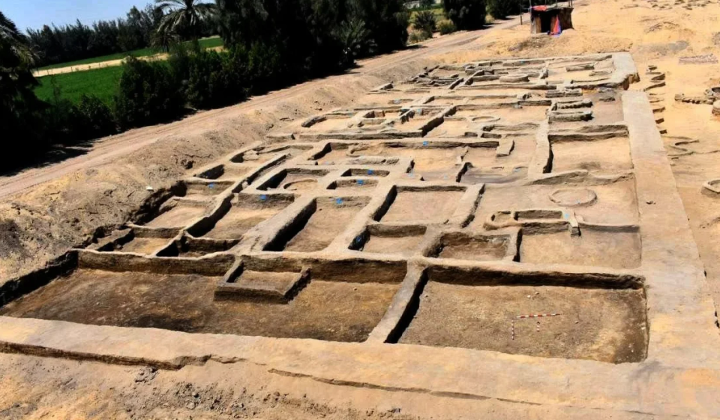
According to НВ — Техно: Archaeologists in eastern Egypt have made a significant find, uncovering an ancient settlement and tombs at Tel El-Koa dating to the 15th and 18th dynasties. This period spans the transition from Hyksos rule to the New Kingdom. The discovery sheds new light on daily life and settlement patterns in the eastern Nile Delta. Notably, the team identified a residential complex measuring roughly 30 by 60 meters, enclosed by a mudbrick wall approximately 1.5 meters thick.
Key Findings
Among the major discoveries are ten mudbrick tombs of varying sizes and orientations, all dating to the 15th Dynasty. These tombs represent the first instance of human burials found outside official burial sites at this location. Archaeologists also uncovered skeletons of individuals aged roughly 25 to 40 years, along with a large quantity of animal bones.
“During the excavations, ten mudbrick tombs of different sizes and orientations were uncovered,” stated Mohamed Abdel Badi, head of the Egyptian Antiquities Sector at the Supreme Council of Antiquities.
The excavations are being led by Mustafa Hassan, director of the Ismailia Archaeological Zone. He emphasized that “archaeological evidence indicates the settlement remained inhabited until the middle of the 18th Dynasty, covering the transitional period from Hyksos rule to the establishment of the New Kingdom of Egypt.” Additionally, the finds include a large number of pottery vessels bearing production marks and seals, suggesting the settlement was part of extensive trade networks.
A key aspect of this discovery is the strategic importance of Tel El-Koa, located along the Wadi Tumilat corridor-one of the main routes connecting the eastern Delta to Egypt’s eastern border.
“The findings highlight the strategic significance of Tel El-Koa,” noted Dr. Hisham El-Leithy, Secretary General of the Supreme Council of Antiquities.
In Minya Governorate, archaeologists have also discovered two ancient tombs dating to the Predynastic period and later eras. Preliminary studies suggest similarities between these structures and the tomb of King Den at Abydos. This finding could be key to a deeper understanding of the social and economic structure of ancient Egyptian society.
The discoveries at Tel El-Koa and Minya point to active development in ancient Egyptian settlements and their interaction with trade routes during the period between Hyksos rule and the New Kingdom. These finds may aid research into the socio-economic connections of the time, as well as the study of religious practices that took place in these settlements. They indicate that life in ancient Egypt was multifaceted and dynamic, with active exchanges between different regions. This discovery opens new avenues for further archaeological research in the area.
This recent discovery in eastern Egypt not only reveals the daily life of the ancient inhabitants but also parallels other significant archaeological finds in the region. For instance, a remarkable tomb from the Predynastic period was recently unearthed in the Gebel el-Tair region, further illuminating the rich history of burial practices and settlement patterns in ancient Egypt.

Read also