Roman City Claudivium Unearthed in Lower Austria Featuring an 8,000-Seat Amphitheater

Discovery of the Ancient Roman City Claudivium
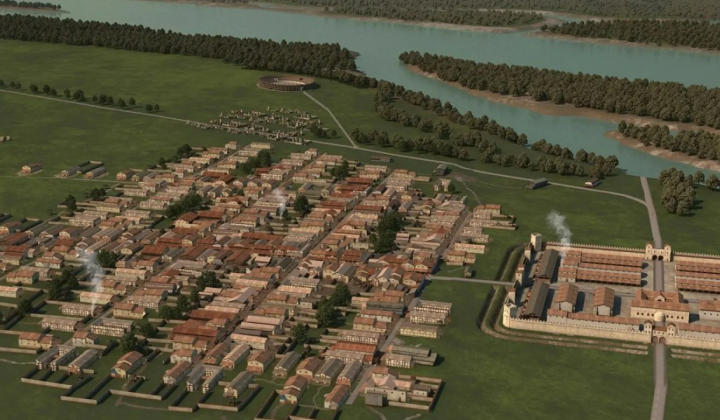
According to НВ — Техно: Archaeologists have uncovered the remains of a previously unknown Roman city in Lower Austria, spanning 25 to 30 hectares. The site includes a well-organized street layout, extensive cemeteries, and a large amphitheater capable of seating around 8,000 spectators. This settlement is believed to be the lost city of Claudivium, which thrived between approximately 80 and 180 AD before being deliberately abandoned. The discovery stems from years of research into the Roman military presence along the Danube frontier.
Researcher Gerald Grabherr explains:
“Geophysical surveys reveal a planned urban area of 25 to 30 hectares with a regular street grid and an amphitheater accommodating roughly 8,000 people.”
Studies indicate the city was deserted around 180 AD without signs of destruction. Archaeologist Barbara Keinrat adds:
“Our findings suggest the population was systematically relocated around 180 AD, with no evidence of the settlement being destroyed.”
Additional Archaeological Insights
Beyond the city, excavations have also uncovered an unfinished legionary fortress in Albina and a previously known 2nd-century stone fort near Stein. Notably, the military site by the Enns River controlled a strategic Danube crossing near the mouth of the Aist River, while the Aist valley served as a key trade route linking the Danube and Vltava rivers.
The Stein fort, later used as a quarry for building materials after abandonment, covered 25 to 30 hectares and housed approximately 500 auxiliary soldiers-a scale unprecedented in the Roman Empire. Large cemeteries with graves of wealthy inhabitants were found along the roads leading out of the city. Coins discovered connect the site's abandonment to events following Emperor Marcus Aurelius's death and the rise of Commodus, coinciding with the end of the Marcomannic Wars around 180 AD.
Following peace treaties under Commodus, Roman strategy in the region shifted, leading to a threefold population increase in Lauriacum (modern Enns) as residents relocated from Stein. This breakthrough has the potential to significantly reshape our understanding of Roman history in this area.
The uncovering of Claudivium highlights the crucial role of archaeological research in deepening knowledge of the Roman Empire. These findings not only enrich the narrative of Roman life in Lower Austria but also offer insights into the social and economic transformations triggered by imperial politics. The circumstances surrounding the city's abandonment may reflect broader regional changes that merit further investigation.

Read also