How Ancient Galaxies Stop Making Stars: Astronomers Pinpoint the Trigger

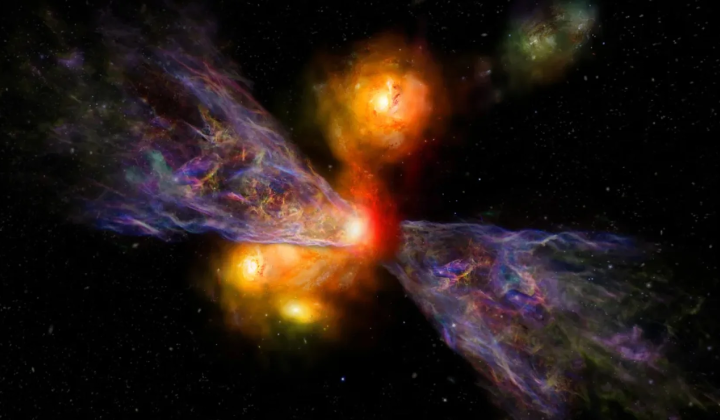
When Star Formation Shuts Down at Breakneck Speed
According to НВ — Техно: An international team of astronomers has identified the mechanism behind the rapid halt of star formation in ancient galaxies, using the system CRISTAL-02 as a case study. Powerful stellar winds triggered by galactic collisions are to blame. This merger causes the galaxy to lose its star-building material faster than it can create new stars. Scientists predict a similar event will unfold roughly 4.5 billion years from now when the Milky Way merges with Andromeda.
Inside the CRISTAL-02 System
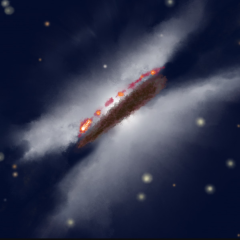
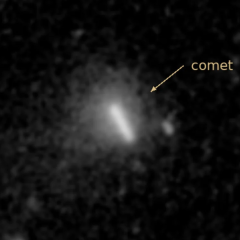
Published on June 23 in the journal Monthly Notices of the Royal Astronomical Society, the study focuses on the CRISTAL-02 galaxy system, which existed about 1 billion years after the Big Bang. With a mass of approximately 10 billion solar masses, this system formed from the collision of several objects. Researchers observed a gas tail nearly as long as the galaxy itself, containing the equivalent of 1.5 billion suns. This gas is streaming away at speeds reaching hundreds of kilometers per second.
The gas outflow is driven by intense winds produced by rapid star formation and the violent deaths of massive stars. In this system, those massive stars explode as supernovae just a few million years after being born. CRISTAL-02 generates around 260 new stars each year, yet it loses over 500 solar masses of material annually. That means the galaxy is ejecting gas twice as fast as it forms stars, and its fuel supply will run out in under 100 million years.
The researchers also note that the future merger of the Milky Way and Andromeda-expected in about 4.5 billion years-will likely produce a single large but dead elliptical galaxy. This finding underscores how critical it is to study star formation and galactic evolution across cosmic time.
The results of this study could significantly reshape our understanding of cosmic processes and how galaxies evolve. By uncovering the mechanisms that bring star formation to a halt, astronomers gain clearer insight into how factors like galaxy mergers and stellar winds shape galaxies throughout different eras of the universe. This knowledge may even help predict the fate of our own galaxy as it interacts with its neighbors.
Understanding the mechanisms that lead to the cessation of star formation is crucial for grasping the life cycles of galaxies. In a related study, researchers using the Webb Telescope have observed how powerful winds contribute to the decline of galaxies. These findings align with the recent insights from the destructive forces impacting galaxy evolution, providing a broader context for the challenges ancient galaxies face in sustaining star formation.

Read also