Deer Antlers Found in Unusual Iberian Burial in Spain

Archaeological Discovery at Cerro de las Cabezas
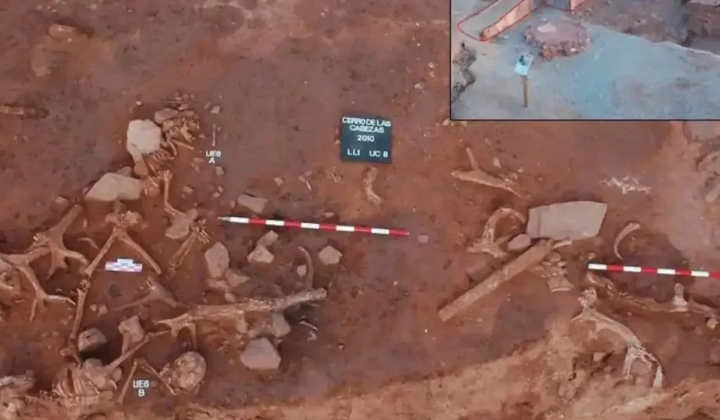
According to НВ — Техно: A burial site containing two adult males, dating from the late 3rd to early 2nd century BCE, has been uncovered in the Iberian settlement of Cerro de las Cabezas, near Valdepeñas in the province of Ciudad Real, Spain. This discovery has captured the attention of archaeologists because the bodies were discarded outside the settlement’s defensive wall alongside six red deer antlers. The remains show signs of violent death, highlighting the possible social exclusion of these individuals.
According to archaeological data, the first man was between 35 and 45 years old. He survived a blow to the head several weeks before his death but later suffered a cut to the thigh that caused fatal blood loss. The second man was older, aged 40 to 59, and his severed head was found 40 centimeters away from his body. Notably, these men were not cremated, which contrasts with typical Iberian burial practices where cremation was common.
Burial Sequence and Significance of Deer Antlers
The burial sequence at Cerro de las Cabezas is unusual. First, deer antlers were placed in the pit, followed by the first body, then the second body partially overlapping the first. Additional antlers were added, and the severed head of the second man was placed on his arm. Red deer antlers held great significance in Iberian society as raw material for tools and prestige items, and they also served a ritual function. Similar finds with antlers have been studied at Celtic and Celtiberian sites, where such rituals often took place under defensive walls as protective offerings.
Isotopic analysis suggests the men may have come from different regions. The diet of one indicates a lifestyle linked to livestock herding and mobility. This discovery is unique in Iberian archaeology due to the absence of burial structures and grave goods, which further underscores the exceptional nature of the burial.
Sources of information about this find include Heritage Daily and NV Tekhno. The excavations at Cerro de las Cabezas are opening new avenues for understanding the social structures and rituals of Iberian peoples.
This archaeological case challenges traditional views on Iberian funerary practices, especially given the lack of cremation and typical grave goods. The remains may indicate social isolation or stigmatization of these individuals, warranting further study to understand the social norms of that era. Research on such findings helps archaeologists better comprehend the complex social structure and rituals that existed within Iberian communities.
The significance of burial practices in ancient societies is further highlighted by another recent discovery, where 77 headless bodies were found in a Neolithic ditch in Slovakia. This find sheds light on the ritualistic and potentially violent aspects of burial customs, much like the intriguing case at Cerro de las Cabezas, where the treatment of the deceased raises questions about societal norms and beliefs surrounding death.

Read also