Expert on the baby boom after the war: why there will be no sharp increase in birth rates in Ukraine

Impact of the war on birth rates in Ukraine
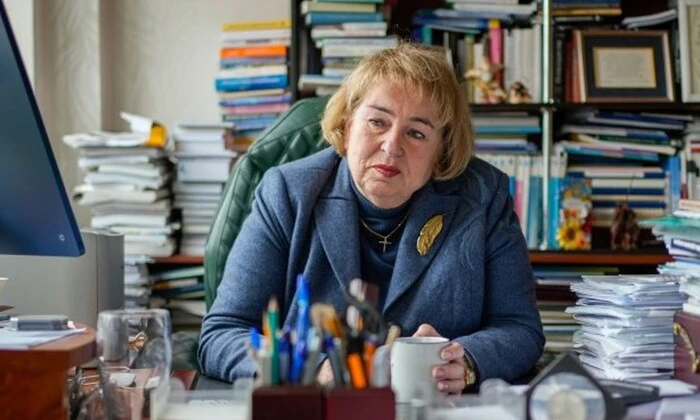
According to glavcom.ua: After the war in Ukraine ends, notes the director of the Mikhail Ptukha Institute of Demography and Social Studies of the NAS of Ukraine, Ella Libanova, there will likely not be a significant increase in birth rates. She explains that after World War II there was a baby boom, as it was advantageous to have many children at that time and raising them was simpler, while in the modern world the requirements for comfort and living standards are higher.
The expert hopes that after the war there will be no mass increase in birth rates, as living conditions today are no longer as simple as in the past. She cites her grandmother, who lived in a ruined entryway with her children after the war, while neighbors provided assistance. In modern society, such a situation is no longer the norm.
According to Ella Libanova, the increase in the level of education and the use of better contraception methods will also affect birth rates. In 2021, there were an average of 2.1 children per woman, but during the war this figure may decrease to 0.7.
Social support for families in Ukraine
In 2026, the largest reform of social support for families in Ukraine in recent decades will begin. Increased payments for childbirth and new monthly programs will be aimed at supporting parents and children. This is a step towards restructuring the family support system in the country.
The government plans to introduce not only one-time payments but also childcare payments, support for working parents, as well as packages for newborns and first graders. This is an important step in supporting Ukrainian families and increasing birth rates in the country.
“After the war, this figure may gradually increase to 1.6, but not more. For the next generation to replace the parent generation, 2.15 is needed. To be honest, even in Europe, this figure is not 2. This is the 'norm'. And even in Asia. In South Korea, where the standard of living is decent, this figure is also 0.7.”
“I often remember: my grandmother returned to Kyiv from evacuation in 1944, and she lived in an entryway with two children. Their house was demolished, and they settled in the entryway of a neighboring house. Residents would let them wash and cook food. Today, it's unlikely that any family would agree to what that generation agreed to. Back then, everyone lived like that. Today, this is not considered the norm.”
Possible changes after the war in Ukraine will not be accompanied by a mass increase in birth rates due to the more challenging living conditions in the modern world. At the same time, the planned reform of social support for families in Ukraine may positively impact family well-being and increase birth rates in the country.

Read also